
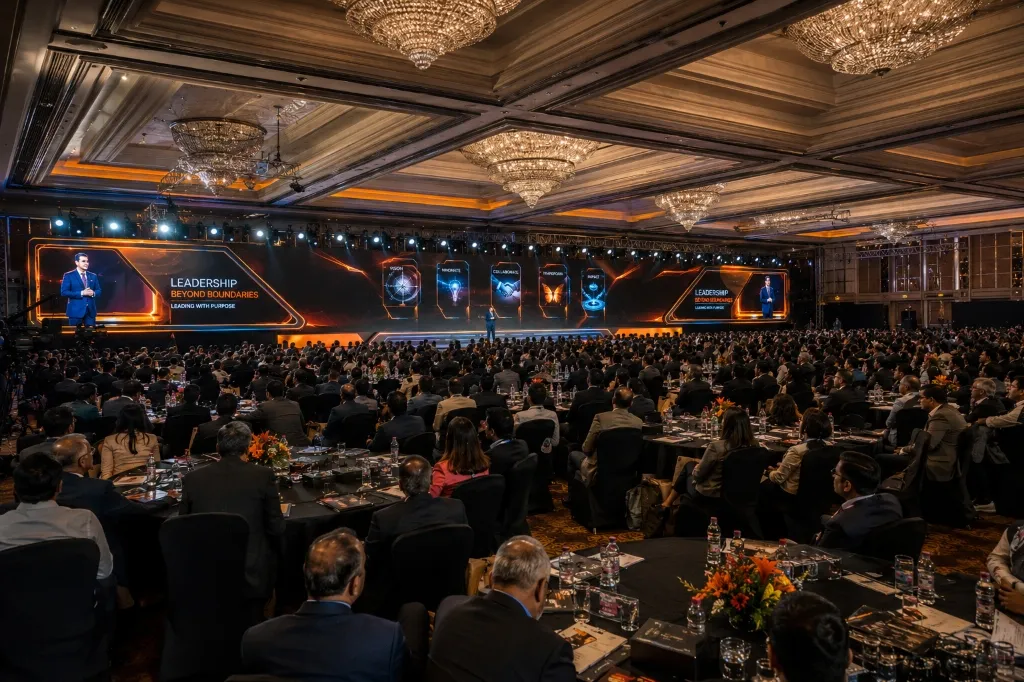
Executing an enterprise summit, AGM, or international convention in Delhi NCR places corporate reputation directly on the line. When 500 to 2,500 delegates gather, a frozen slide, audio dropout, or registration queue compromises months of planning. Procurement teams must distinguish decorator pitches and dry-hire rentals from technical production agencies capable of live execution.
Executive Answer: What to Evaluate in an Event Production Partner: A corporate event production company in Delhi NCR should be evaluated on operational resilience rather than aesthetic renderings alone. Enterprise buyers must assess prospective partners across ten core disciplines: verified Delhi NCR venue loading dock and acoustic experience, in-house 3D CAD spatial design, Tier-1 equipment standards, certified Front-of-House (FOH) show direction, clear separation between technical crews and hospitality staffing, N+1 electrical and signal redundancy, statutory compliance (Delhi Fire Service and CPCB ambient noise limits), named single-point project ownership, and verifiable case studies in marquee regional venues. Evaluating proposals on resilience over lowest-bid pricing guarantees keynote continuity.
Whether producing a convention at Delhi NCR's major hubs or hosting a gala in a luxury hotel, choosing a partner requires a disciplined framework. This guide outlines how corporate buyers evaluate, compare, and contract production partners across the region.
Why Choosing an Event Production Company Is Different from Choosing a Decorator or AV Vendor
Corporate procurement often conflates technical production with surface décor or standalone AV rental. Their operational scopes differ fundamentally:
- Event Décor & Fabrication: Focuses on visual styling and draping. Decorators create ballroom aesthetics, but do not engineer structural rigging, clean power, acoustic coverage, or live switching.
- Standalone AV Equipment Rental: Provides dry-hire audio, video, and lighting hardware. Rental vendors supply gear, but rarely model acoustics, lock EDID signals, engineer power backups, or direct live stage cues.
- Event Staffing & Hostess Agencies: Manages guest hospitality—registration, ushering, and VIP escorting—without technical duties (see our guide on corporate event staffing requirements).
- Technical Event Production Company: Engineers the complete physical, acoustic, visual, and power infrastructure—including certified trussing, line arrays, curved LED walls, dual power backups, and FOH show direction.
- End-to-End Turnkey Event Execution: Unifies technical production, staging, and staffing under a single Technical Director, eliminating vendor friction and aligning door opening with stage readiness from ingress to strike.
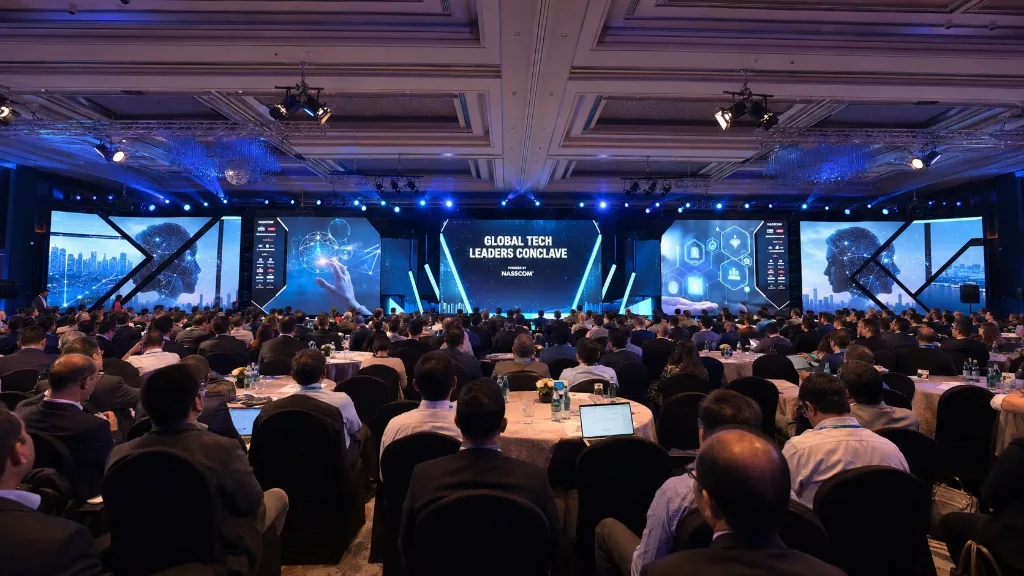
The 10 Things a Corporate Buyer Should Evaluate
When reviewing credentials, enterprise buyers should evaluate prospective partners against ten operational standards:
1. Relevant Event Format Experience
Verify proven delivery in your specific format: summits demand graphics switching and speech intelligibility; AGMs require secure feeds; galas need theatrical lighting. Request cue sheets and CADs from matching events.
2. Venue and City Logistics Experience in Delhi NCR
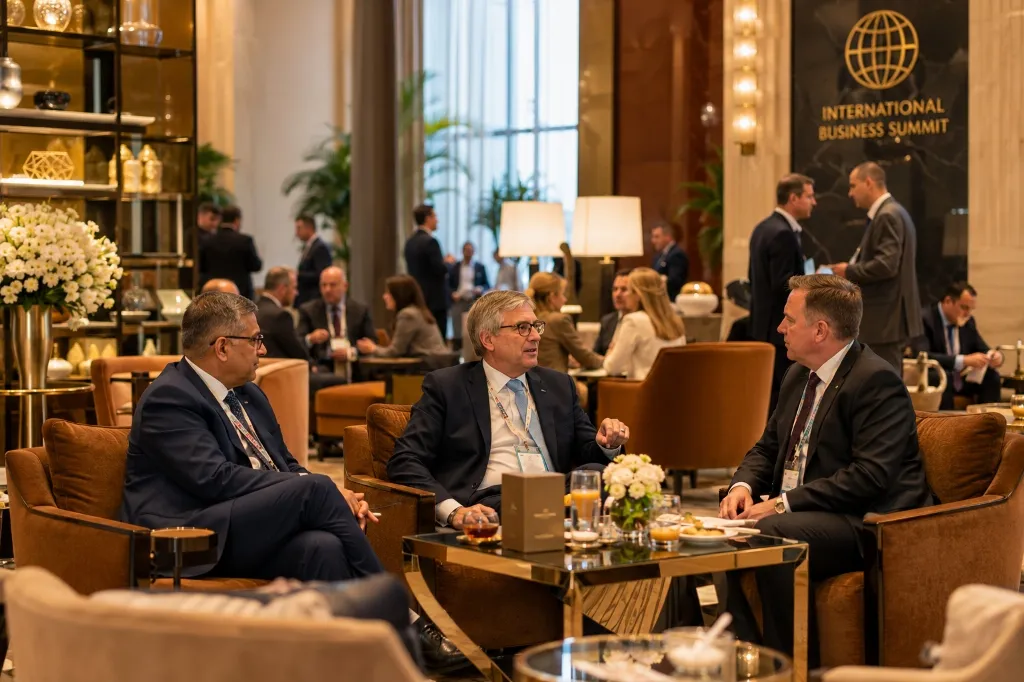
Proven delivery in marquee venues (Taj Palace, ITC Maurya, The Leela Gurugram, Bharat Mandapam, Yashobhoomi) is vital (see our practical checklist on how to choose a corporate event venue in Delhi NCR). Regional teams understand loading docks, freight elevators, truck curfews, and power tap protocols.
3. Technical Hardware Standards
Insist on verified Tier-1 hardware in the BoQ: sound systems (L-Acoustics or d&b), presentation switchers (Barco E2), digital wireless mics (Shure Axient Digital), and fine-pitch LED panels (P1.9 to P2.6).
4. In-House Planning, 3D CAD & Technical Design
Require scaled 3D CAD drawings, sightline cross-sections, and acoustic simulations prior to load-in. In-house modeling ensures unobstructed sightlines from row 1 to 30 and uniform sound coverage (±2 dB).
5. Event Staffing and On-Ground Supervision
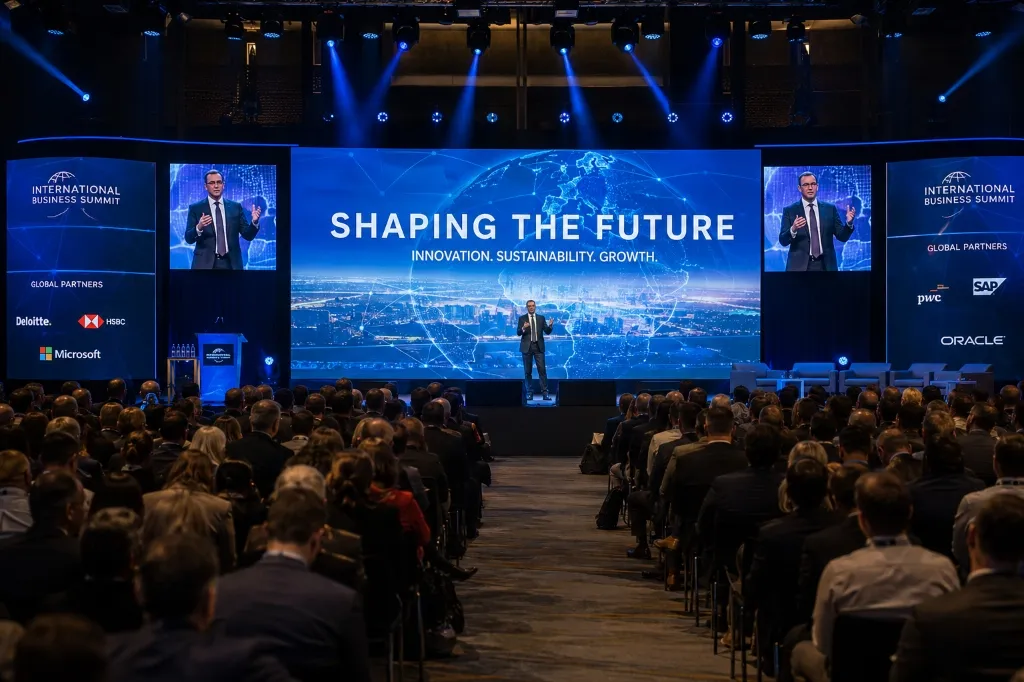
Require clear separation between technical crews and hospitality staff. Certified engineers must manage AV systems, while trained hostesses handle registration and ushering under dedicated zone supervisors (1:6 to 1:8 span) with a 10% to 15% standby reserve.
6. Show Calling, Master Cue Sheets & Rehearsal Protocols
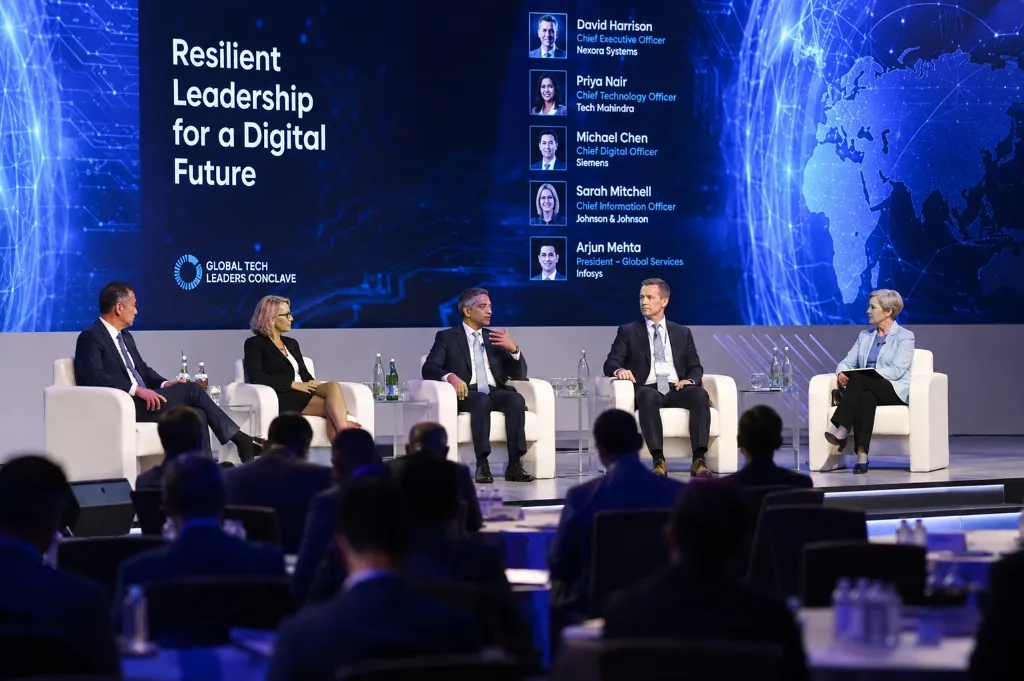
Confirm a dedicated Technical Director will call cues via a minute-by-minute run-of-show. The schedule must include dedicated rehearsal windows for RF scans, clicker checks, 16:9 slide formatting, and a full technical dry run.
7. Backup & Redundancy Architecture (N+1 Failover)
Require 1:1 redundancy for mission-critical systems: synchronized dual silent DG sets with auto-transfer, online double-conversion UPS protecting FOH consoles, and synchronized primary/backup presentation laptops on auto-failover switches.
8. Safety Engineering & Statutory Compliance
Verify Delhi Fire Service (DFS) compliance, flame-retardant fabric certificates, unobstructed emergency egress aisles meeting National Building Code norms, structural engineer sign-offs on flown trussing, and CPCB ambient noise compliance.
9. Single Point of Contact & Project Ownership
A named Senior Project Director must act as single point of contact (SPOC) from pre-production through strike. Clients should never need to coordinate separately between audio, lighting, staging, and generator teams on event morning.
10. Verifiable References and Case Studies
Demand authentic case studies with verified event photography, venue citations, delegate counts, and corporate references from events delivered in the past 12 to 18 months.
Questions to Ask Before Sending an RFP
Before issuing a formal tender, review our step-by-step corporate event RFP template and scoring guide, and conduct an initial screening using these ten operational questions:
Key Pre-RFP Operational Screening Questions:
- 1. Technical Leadership: Who will be the named Technical Director directing Front of House on event day?
- 2. Technical Planning: Are 3D CAD spatial drawings and acoustic simulations generated in-house or outsourced?
- 3. Freight Logistics: How will your team manage Delhi commercial truck curfews and hotel loading dock schedules?
- 4. Redundancy Architecture: What automated failover switch connects primary and backup presentation laptops?
- 5. Crew Continuity: What contingency procedure covers sudden illness or delays for key technical operators?
- 6. Staffing Telemetry: How do you track attendance and shift rotations for front-of-house hostesses on site?
- 7. Rehearsal Windows: What is your mandatory technical dry-run duration before delegate doors open?
- 8. Statutory Clearances: Who secures venue fire-safety approvals and structural rigging stability certificates?
- 9. Sourcing Transparency: Which elements are owned in-house versus subcontracted to third parties?
- 10. Last-Minute Changes: How does your video workflow accommodate CXO presentation updates 10 minutes before stage entry?
How to Compare Two Event Production Proposals
Evaluating bids solely on headline numbers is dangerous: lower quotations often conceal omitted backup systems, unbranded hardware, or outsourced labor (for benchmark ranges across formats, see our Delhi NCR corporate event cost guide). Use this 10-point framework to objectively compare event production proposals on total value and execution confidence:
| Evaluation Dimension | Comprehensive Enterprise Proposal | High-Risk / Low-Bid Proposal |
|---|---|---|
| Scope Completeness | Itemized BoQ with exact models and labor. | Vague bundled packages omitting critical cabling. |
| Hardware Rigor | Named Tier-1 brands (L-Acoustics, Barco, Shure Axient, P2.6 LED). | Generic terms ("High-definition LED", "Standard audio") hiding unbranded gear. |
| Staffing Structure | Dedicated Technical Director, FOH engineers, separate hostess team. | Minimal crew; expects AV technicians to handle guest registration. |
| Redundancy & Failover | N+1 backup switchers, online double-conversion UPS, synchronized DG sets. | Zero redundancy; single presentation machine on building wall power. |
| Venue Logistics | Detailed load-in schedule coordinated with hotel loading docks. | Unscheduled freight; risk of dock refusal and lost rehearsal time. |
| Pre-Production CAD | Scaled 3D CAD drawings, sightline studies, and acoustic simulations. | Generic 2D sketch or stock render with no venue dimensions. |
| Project Ownership | Named Production Director commanding all on-ground disciplines. | Uncoordinated vendors; client forced to manage trades directly. |
| Safety Clearances | Engineered truss sign-offs and flame-retardant fabric certs. | No structural documentation; risks venue shutdown. |
| Rehearsal Allocation | Mandates 3-to-4-hour technical rehearsal buffer before doors open. | Setup finishes minutes before doors open; no rehearsal time. |
| Pricing Transparency | Transparent pricing with zero hidden exclusions. | Low base quote generating mid-event add-ons for power and transport. |
Red Flags in an Event Production Proposal
When reviewing proposals, procurement officers should watch for these ten red flags signaling elevated risk:
- 1. Vague Scope Descriptions: Items like "Standard lighting package" lacking exact fixture models, wattages, or channels.
- 2. No Named Technical Director: Inability to name the lead director who will call cues on event day.
- 3. Missing 3D CAD Drawings: Stock renders that ignore venue ceiling heights, chandeliers, and column obstructions.
- 4. Zero Redundancy in BoQ: Omission of backup presentation laptops, spare wireless mics, or online UPS units.
- 5. Artificially Low Pricing: Quotes 40% below market that omit silent generators, transport permits, or deposits.
- 6. Undifferentiated Manpower: Failing to separate technical AV crew from hospitality hostesses and supervisors.
- 7. Rehearsal-Free Timelines: Setup schedules completing right as doors open, eliminating rehearsal windows.
- 8. Disregard for Venue Rules: Ignoring commercial truck curfews on NH-48 or hotel loading dock clearances.
- 9. Unmonitored Subcontracting: Intermediaries subcontracting audio, staging, and staffing without technical supervision.
- 10. Generic Portfolio Evidence: Stock photo galleries lacking client names, delegate counts, or verified venue context.
What a Strong Delhi NCR Event Production Plan Should Contain
A comprehensive technical production plan for an enterprise summit systematically documents every phase:
- Venue Technical Survey: Dimensional mapping of ceiling rigging points, loading dock clearances, power feeds, and room acoustics.
- 3D CAD Spatial Engineering: Scaled floor plans showing stage deck elevations (3.5ft to 4.5ft), audience sightlines, and egress corridors.
- Stage & Scenic Fabrication: Modular box trussing, timber decking with matte laminate, and flame-retardant drapes.
- Visual Display Architecture: Fine-pitch curved LED walls (P1.9 to P2.6), Barco switchers, synchronized primary/backup laptops, and downstage confidence monitors.
- Acoustic Reinforcement: Time-aligned dual line arrays, delay speaker columns, speech mics, and active RF spectrum coordination.
- Broadcast-Grade Lighting: High-CRI profile fixtures (TLCI > 96) at 5600K daylight balance with shutters preventing LED screen spill.
- Dedicated Clean Power: Synchronized dual DG sets with automatic transfer switches, isolated AV circuits, and online UPS banks.
- Guest Flow & Ingress: High-speed QR scanning and thermal badge printing in under 3 seconds across 8 to 12 bays (see our guide to corporate event production in Delhi NCR).
- On-Ground Staffing: Front-of-house hostesses, registration crew, and VIP escorts managed by dedicated zone supervisors.
- Show Direction: Minute-by-minute master cue sheet, wireless intercom channels, and dedicated green room coordinators.
- Strike & Handover: Controlled de-rigging schedule, zero-damage venue inspection sign-off, and attendance reporting.
How Aquila Approaches Corporate Event Production
At Aquila Events, our production methodology centers on technical discipline and end-to-end accountability. Our published case studies demonstrate this standard:
- Integrated Production & Workforce Architecture: We unite turnkey corporate event management and technical event production with corporate event staffing. Workforce technology via Promotr enables real-time check-in telemetry, attendance tracking, and trained hostesses coordinated directly with FOH show callers.
- Marquee Track Record in Premier Delhi NCR Venues: Our verified case studies reflect proven execution across landmark venues:
- National Leadership Summit at Taj Palace, New Delhi: Turnkey staging, 45ft curved LED backdrop, line arrays, and automated registration for 1,200 delegates.
- International MICE Conclave at JICC, New Delhi: Production across 4 session tracks, 60ft plenary LED wall, translation systems, and hospitality for 2,500 attendees.
- Decade of Innovation Gala at ITC Maurya, New Delhi: Celebration staging, kinetic lighting, acoustic tuning, and VIP hospitality for 800 guests.
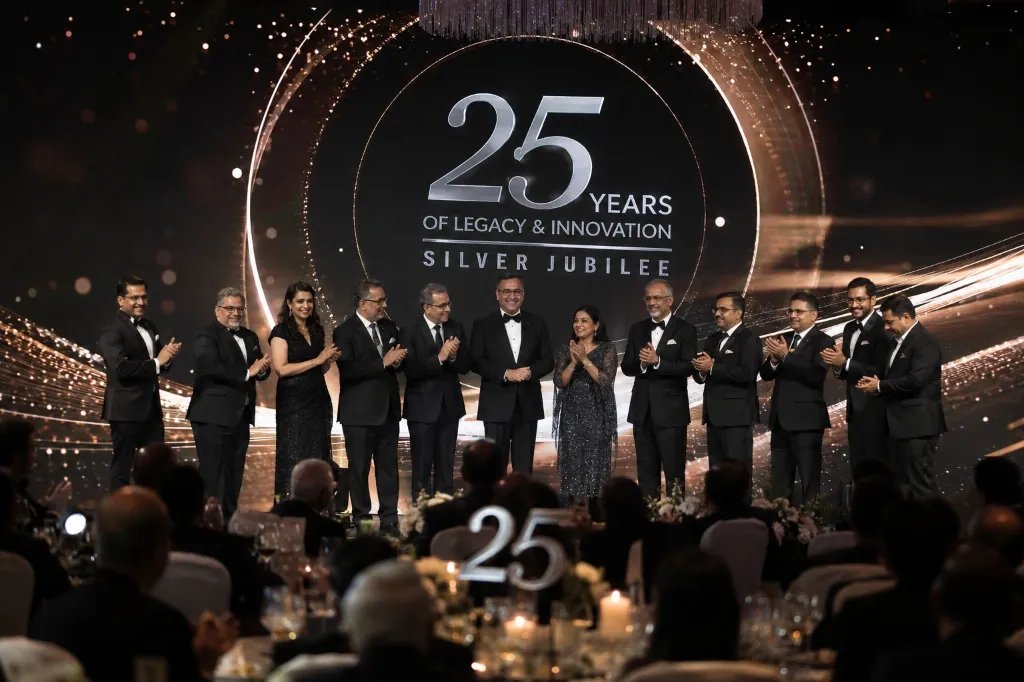
- 25th Silver Jubilee Anniversary Gala at The Leela Gurugram: Custom metallic entrance archway, executive protocol, wide LED timelines, and hospitality for 500 executives.
- Clear Operational Boundary: We distinguish verified first-party evidence from general industry guidance. Every Aquila deployment is engineered against venue CAD drawings, loading dock constraints, and client run-of-show requirements.
Corporate Event Production Buyer Checklist
Use this practical checklist to verify prospective partners across procurement and planning:
| Planning Phase | Evaluation Item | Verification Standard | Operational Risk Mitigated |
|---|---|---|---|
| Vendor Screening | Regional Track Record | Verified case studies in your booked hotel or convention center. | Dock delays, security entry refusals, and rigging conflicts. |
| Vendor Screening | Hardware Standards | BoQ naming Tier-1 audio (L-Acoustics/d&b) and video (Barco). | Component failure rates and poor speech intelligibility. |
| Proposal Review | 3D Spatial CAD | Scaled 3D drawings with sightline angles for rows 1 to 30. | Blocked visibility and poor sightlines. |
| Proposal Review | Power & Signal Redundancy | Synchronized dual DG sets (N+1) and online UPS battery banks. | Stage blackouts and keynote presentation freezes. |
| Proposal Review | Workforce Hierarchy | Named Technical Director, separate engineers, and hostess supervisors. | Disorganization, unmonitored breaks, and registration bottlenecks. |
| Contracting | Safety Clearances | Structural engineer rigging sign-offs and DFS flame-retardant certs. | Venue safety shutdowns and legal liabilities. |
| Pre-Production | Rehearsal Buffer | Mandated 3-to-4-hour dry run with emcee and cue callers. | Missed cues, audio delays, and presenter timing errors. |
| Show Day (T-0) | Comms & Telemetry | Full-duplex intercom check and registration telemetry. | Comms bleed and morning delegate queue snarls. |
Frequently Asked Questions About Corporate Event Production in Delhi NCR
An event production company manages turnkey technical delivery: 3D CAD design, staging, line arrays, LED walls, broadcast lighting, dual clean power backups, safety clearances, and Front-of-House show direction.
AV rental vendors supply dry-hire equipment. A technical production company engineers an integrated live environment: structural rigging loads, acoustics, failover video routing, crew hierarchies, and live show calling.
For summits with 500 to 2,500 delegates in premier Delhi NCR venues, appointing a partner 8 to 12 weeks in advance ensures adequate lead time for CAD modeling, licensing, and rehearsals.
Consolidating production and front-of-house staffing under one partner eliminates operational friction, synchronizing delegate ingress, door opening, VIP seating, and keynote roll-outs with the master cue sheet.
A professional quote must specify: (1) certified trussing, (2) named Tier-1 hardware models, (3) primary/backup graphics workstations with auto-failover, (4) synchronized dual DG sets, (5) online UPS, (6) named technical directors, and (7) freight timelines.
Low-cost proposals often omit critical safeguards: zero N+1 equipment redundancy, relying on unstable building wall power instead of silent generators, unbranded audio/video gear, no overnight freight labor, and no dedicated FOH technical director.
Venue familiarity in Delhi NCR is critical. Five-star hotels enforce strict loading dock clearances, ceiling load limits, and city truck curfews. Convention hubs require long cable runs, formal power taps, and security clearances.
Planning a Corporate Event in Delhi NCR?
Consult directly with our technical event directors for comprehensive venue feasibility, 3D spatial staging models, and turnkey production execution.
Ready to Produce Your Next Event?
Consult directly with our technical event architects for turnkey production, staging, and logistics across India.