
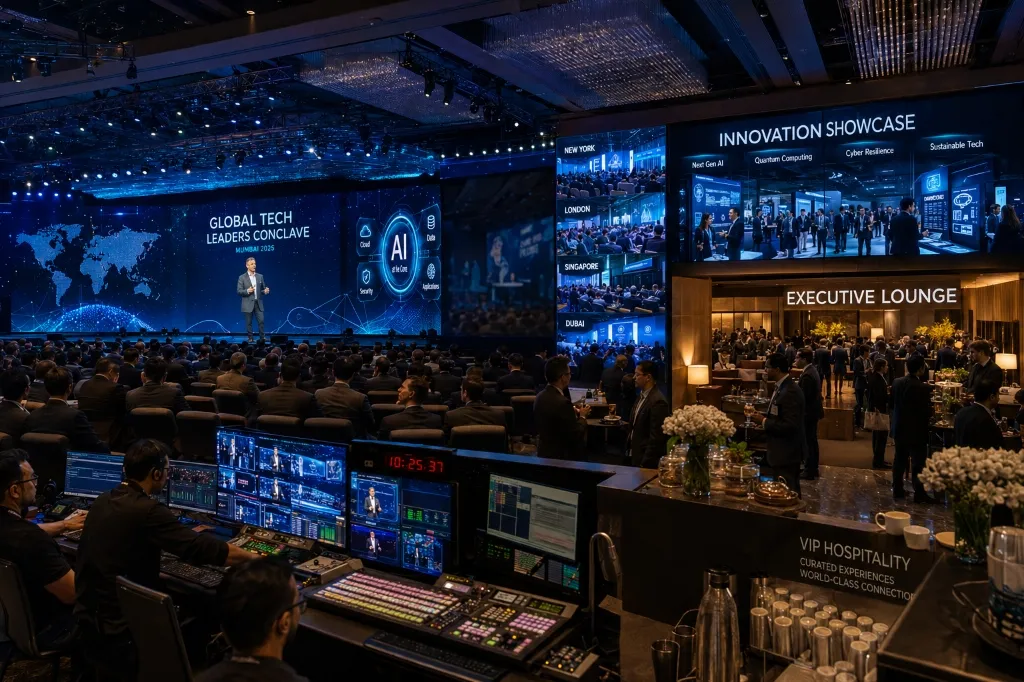
Executive Answer: What Should a Corporate Event RFP Include?
A corporate event Request for Proposal (RFP) is a formal procurement document issued by an organization to invite competitive, structured bids from event management and technical production agencies. Unlike a casual inquiry, a well-engineered RFP provides shortlisted agencies with the exact business objectives, target audience demographics, scale, venue parameters, staging and AV specifications, operational constraints, budget expectations, expected deliverables, and objective evaluation criteria. Providing clear specifications upfront eliminates guesswork, prevents mismatched scope, and enables an apples-to-apples commercial and technical comparison before awarding the contract.
Hiring an event management or production agency in Delhi NCR is one of the most high-consequence decisions a corporate marketing, HR, or procurement team can make. When an enterprise summit, national partner conclave, or annual awards gala is underway, there are no second takes. A misaligned stage design, an overloaded audio system, or an understaffed registration foyer immediately reflects upon the host brand's executive credibility.
Yet, the procurement process frequently begins on uncertain footing. Corporate teams often issue ambiguous three-paragraph emails requesting "creative concepts and commercial quotations," only to receive four wildly disparate agency proposals. One agency quotes ₹8 Lakh with entry-level audiovisual gear and unverified crew; another quotes ₹38 Lakh with stadium-grade curved LED displays, kinetic lighting, and international hospitality suites. Neither proposal can be objectively compared because the agencies were left to invent the project parameters themselves.
Whether you are planning a 150-delegate CXO roundtable in Aerocity or a 2,000-attendee annual convention at Yashobhoomi (IICC Dwarka) or Bharat Mandapam, a structured RFP is your strongest risk-mitigation tool. This practical guide provides an actionable corporate event brief checklist, a copy-ready RFP template, an objective proposal evaluation framework, and common procurement pitfalls to avoid.
The 8 Essential Pillars of a Professional Corporate Event RFP
Every dependable corporate event proposal request is built upon eight fundamental pillars that convert strategic corporate intent into tangible operational specifications:
- 1. Strategic Objective & Business KPIs: Why is this event taking place, and what measurable behavioral or commercial shift must it generate among attendees?
- 2. Event Format, Schedule & Scale: Confirmed or tentative calendar dates, venue occupancy duration, expected attendee headcount, and session structure.
- 3. Venue Parameters & Physical Constraints: Contracted property details, ballroom dimensions, clear ceiling heights, loading dock timings, and electrical power limits.
- 4. Creative Narrative & Scenography: Thematic branding direction, 3D stage geometry, entrance architecture, and delegate photo-opportunity installations.
- 5. Technical Production Specifications: Display pixel pitch, line-array acoustic dispersion, intelligent lighting rigs, video switching hardware, and redundant backup power.
- 6. On-Ground Operations & Hospitality: Registration technology, delegate accreditation, professional event staffing ratios, catering schedules, and VIP protocol.
- 7. Commercial Parameters & Budget Envelope: Realistic budget brackets, bill of quantities (BOQ) formatting requirements, statutory tax treatment, and payment milestones.
- 8. Submission Governance & Evaluation Rubric: Pitch presentation dates, Q&A clarification windows, decision criteria, and designated points of contact.
Event Brief vs. RFP: Understanding the Operational Distinction
Corporate planners frequently use the terms "Event Brief" and "RFP" interchangeably. While they share core operational DNA, they serve distinctly different stages of the procurement lifecycle:
| Attribute | The Event Brief | The Request for Proposal (RFP) |
|---|---|---|
| Primary Purpose | To articulate the strategic vision, theme, audience profile, and desired business outcomes of the gathering. | To formalize a competitive procurement process, defining contractual scope, deliverables, commercial models, and selection criteria. |
| Typical Author | Marketing Director, Brand Manager, Head of Internal Communications, or HR Leadership. | Procurement Department, Sourcing Lead, or Corporate Administration working in tandem with the Event Steering Committee. |
| Core Focus | The "Why" and "What"—strategic narrative, delegate experience, creative mood, and program milestones. | The "How", "When", and "How Much"—itemized technical specifications, compliance mandates, SLA commitments, and binding pricing templates. |
| Commercial Detail | High-level target budget or indicative ceiling without contractual mandates. | Strict commercial terms, itemized BOQ breakdowns, statutory tax assumptions, indemnity clauses, and payment schedules. |
| Best Applied In | Internal leadership alignment, single-agency creative exploratory sessions, or agile executive retreats. | Multi-agency competitive pitches, annual agency panel empanelments, and high-value technical productions. |
When a Simple Event Brief Suffices: If your organization has already retained an empanelled event partner under an active Master Services Agreement (MSA), or if you are planning an intimate executive roundtable (under 80 guests) where scope is straightforward, a concise 2-page Event Brief is sufficient. It allows your existing agency to quickly mobilize venue feasibility and commercial estimates without formal procurement bureaucracy.
When a Formal RFP is Non-Negotiable: A structured RFP is essential when contracting multi-lakh or multi-crore flagship conferences (see our analysis of corporate event costs in Delhi NCR), when soliciting competitive bids from new market contenders, when public-sector or listed enterprise compliance mandates transparent multi-vendor governance, or when high-stakes technical production requires verifiable equipment redundancy (see our guide to corporate event production in Delhi NCR).
The Complete 14-Point Corporate Event Brief Checklist
Before issuing your proposal request, assemble the following fourteen operational building blocks. Providing these details upfront prevents endless clarification emails and guarantees that every agency quotes against the exact same reality:
1. Business Objective & Desired Impact
Articulate the core commercial reason for convening. Are you launching an enterprise software suite to 400 CIOs to shorten sales cycles? Are you celebrating an annual milestone to boost employee retention? Are you hosting an international investor summit to signal market leadership? Define what a successful outcome looks like in tangible terms (e.g., "100% on-schedule keynote delivery, zero technical audio glitches, and immediate positive delegate sentiment").
2. Event Format, Schedule & Duration
Specify the temporal geometry of the event: single-day plenary, multi-day residential conclave, or multi-track convention. Include confirmed or tentative dates, noting any date flexibility (±1 to 2 weeks). Crucially, clarify total venue occupancy hours, including required dark-hour setup windows (e.g., "Ballroom access required from 8:00 PM on Eve of Event for stage build and rehearsals; live event runs 9:00 AM to 6:00 PM; strike complete by 11:30 PM").
3. Location, Venue Preferences & Regional Logistics
Clarify whether a venue is already contracted or if venue sourcing is part of the agency's brief. If searching in Delhi NCR, specify sub-regional preferences: Aerocity (optimal for international travelers arriving at IGI Airport), Gurugram Cyber City / NH-48 (ideal for Fortune 500 tech and automotive headquarters), Central Delhi (Chanakyapuri / Pragati Maidan for diplomatic and central corporate access), or mega convention centers such as Yashobhoomi or Bharat Mandapam (see our corporate event venue selection checklist).
4. Expected Attendance, Audience Demographics & VIP Protocols
Detail total delegate volume and seniority breakdown. An audience of 500 field sales associates requires high-energy staging, modular banquet seating, and rapid buffet lines; an audience of 80 global managing directors requires acoustic intimacy, executive boardroom seating, encrypted Wi-Fi, and private green room hospitality. Mention whether high-profile government dignitaries, VVIP speakers, or foreign nationals require specialized security liaison, protocol escorts, or motorcade management.
5. Agenda Structure, Speaker Cues & Program Milestones
Provide a high-level run-of-show outline. Identify primary program milestones: morning registration, executive keynotes, panel discussions, breakout workshops, lunch transition, evening awards ceremony, and networking cocktails. Agencies need this to schedule audio-visual operator shifts, stage changeovers, lighting mood transitions, and catering flow.
6. Creative Direction, Thematic Narrative & Staging
Communicate your visual and narrative aspirations. If an overarching conference theme exists (e.g., "Accelerate 2027: Engineering Sustainable Growth"), share the theme, brand guidelines, approved color palettes, and typographic rules. Specify required physical branding assets: entrance archways, 3D corporate logos, step-and-repeat media walls, registration fascia, and directional totem displays.
7. Audio-Visual, LED Display Architecture & Technical Production
Technical event production constitutes 25% to 40% of an enterprise event budget. Clearly specify display expectations (e.g., "Seamless 48x12 ft curved fine-pitch P2.6 LED screen with dedicated master video switcher for split-screen speaker pip and keynote graphics"), acoustic criteria (line-array sound dispersion, digital speech consoles, frequency-managed lapel microphones), stage lighting (front wash, moving profile spots, warm ambient backlight), and power redundancy (dedicated dual-synchronized diesel generators).
8. Registration Ingress, Guest Movement & Professional Event Staffing
Outline registration logistics: will you require automated QR-code self-check-in kiosks, thermal badge printing, or traditional alphabetized check-in desks? Specify required event staffing headcounts: bilingual VIP hostesses, registration coordinators, hall ushers, and backstage floor managers (read our corporate event staffing ratio framework). Note whether workforce technology platforms like Promotr are required for live GPS attendance and supervisor verification.
9. Catering Formats, Accommodation & Ground Logistics
Detail hospitality expectations: morning high tea, live food stations, multi-cuisine luncheon buffets, or plated executive dinners. If outstation delegates are attending, state whether the agency is responsible for managing hotel room blocks, airport meet-and-greet desks, and luxury coach transfers between transit hubs and event properties.
10. Scope of Agency Services & Required Deliverables
Clearly delineate where agency responsibility begins and ends. Are you looking for a turnkey agency to handle conceptualization, venue coordination, 3D CAD modeling, AV production, artist booking, staffing, and live show-running? Or do you require a dedicated technical production specialist to execute staging and engineering while your internal team handles speakers and content? (see our production company evaluation guide).
11. Budget Range, Inclusions, Exclusions & Taxes
Provide an indicative commercial envelope (e.g., "₹20,00,000 to ₹30,00,000 excluding venue F&B and statutory taxes"). Specify required commercial itemization: agencies must present separate line items for fabrication, technical AV rental, staffing, logistics, and agency management fees. Insist that all quotes state GST rates (18%) and explicit assumptions regarding venue overtime or electricity tapping fees.
12. Accessibility, Safety, Permissions & Venue Constraints
Highlight mandatory venue-specific and statutory compliance requirements. In Delhi NCR, events exceeding certain occupancy thresholds require Delhi Fire Service NOCs, performance licenses, and sound decibel compliance. Outline physical venue constraints: service lift dimensions, ballroom floor load capacities, and loading bay delivery curfews.
13. Success Metrics, Reporting Expectations & Post-Event Deliverables
Define post-event closure expectations: high-resolution edited photo archives within 48 hours, multi-camera 4K master video recordings, attendance analytics, delegate feedback reports, and itemized final billing reconciliations signed off against delivery sign-offs.
14. Submission Deadlines, Decision Timelines & Contact Person
Provide a structured procurement calendar: RFP issuance date, written clarification Q&A deadline, proposal submission cutoff, shortlist pitch dates, and final award date. Designate a single point of contact (SPOC) with direct phone and email coordinates to prevent communication bottlenecks.
Copy-Ready Corporate Event RFP Template
Below is a standardized, copy-ready Request for Proposal template. Corporate teams can copy this structure into a Word document or procurement portal and customize the bracketed fields for their upcoming event:
================================================================================
REQUEST FOR PROPOSAL (RFP): CORPORATE EVENT MANAGEMENT & TECHNICAL PRODUCTION
================================================================================

1. EXECUTIVE SUMMARY & COMPANY BACKGROUND
- Issuing Organization: [Company Name / Division]
- Primary Event Name: [e.g., Annual Leadership Summit 2027 / Global Partner Conclave]
- Brief Company Profile: [1-2 sentences on company industry, scale, and market presence]
- RFP Issuance Date: [DD/MM/YYYY]
- Proposal Submission Deadline: [DD/MM/YYYY by HH:MM IST]

2. EVENT OBJECTIVES & AUDIENCE PROFILE
- Business Purpose: [e.g., Annual strategy alignment, brand relaunch, channel partner recognition]
- Key Performance Indicators: [e.g., 100% on-schedule execution, flawless keynote broadcast, CXO satisfaction]
- Target Audience: [e.g., 400 Pan-India Channel Partners + 50 Senior Enterprise Executives]
- VIP / Dignitary Attendance: [e.g., Global CEO attending; requires executive protocol & private green room]

3. EVENT DATE, LOCATION & VENUE PARAMETERS
- Proposed Event Date(s): [DD/MM/YYYY] (Date Flexibility: ± [X] days/weeks)
- Preferred Sub-Region: [Aerocity / Central Delhi / Gurugram NH-48 / Noida / Convention Center]
- Venue Contracting Status: [Venue Already Contracted: Name / Agency to Propose Shortlist]
- Required Venue Handover Window:
  * Setup & Fabrication Access: From [HH:MM] on [Date]
  * Technical Rehearsals & Dry-Runs: From [HH:MM] on [Date]
  * Live Show Execution: From [HH:MM] to [HH:MM] on [Date]
  * Teardown & Strike Complete: By [HH:MM] on [Date]

4. REQUIRED SCOPE OF AGENCY SERVICES
[Select / modify required service categories]:
[X] Turnkey Event Management & On-Ground Coordination
[X] 3D Spatial Design, CAD Floor Plans & Stage Scenography
[X] Technical AV Engineering (4K LED Display, Line-Array Sound, Intelligent Lighting)
[X] Stage Fabrication, Lecterns, Entrance Archways & Venue Branding
[X] Automated QR Badge Printing & Registration Ingress Management
[X] Professional Event Staffing (Hostesses, Ushers, Show Callers, Stage Managers)
[X] Multi-Camera Live Broadcast / Webcast & Archival Recording
[X] Executive Hospitality, Speaker Coordination & Green Room Management
[ ] Entertainment Curation & Master of Ceremonies (Emcee) Management
[ ] Venue Sourcing & Hotel Accommodation Negotiation

5. TECHNICAL & PRODUCTION SPECIFICATIONS
- Main Plenary Staging:
  * Stage Dimensions: Minimum [e.g., 36 ft (W) x 16 ft (D) x 2.5 ft (H)] with custom masking
  * Display Architecture: [e.g., Seamless Curved P2.6 LED Wall, min 40 ft x 12 ft]
  * Audio Requirements: [e.g., Dual Line-Array hangs, digital speech console, 6 wireless lapels/handhelds]
  * Lighting Rig: [e.g., Overhead trussing, profile spots for lectern, warm wash, intelligent moving beams]
  * Switching & Content Playback: [e.g., Barco E2 / seamless presentation switcher with preview bus]
  * Power Redundancy: [e.g., Dedicated silent DG set in hot standby + online UPS on all FOH video gear]

6. ON-GROUND OPERATIONS & GUEST EXPERIENCE
- Registration: [e.g., 4 branded check-in counters with instant QR badge thermal printers]
- Staffing Requirement: [e.g., 1 Lead Event Director, 2 Stage Managers, 8 Bilingual Hostesses, 4 Ushers]
- Signage & Branding: [e.g., Entrance archway, 2 registration totems, 1 sponsor step-and-repeat wall]

7. BUDGET PARAMETERS & COMMERCIAL TERMS
- Target Budget Envelope: Indicative range between [₹X,XX,XXX] and [₹Y,YY,XXX] (Exclusive of GST)
- Budget Inclusions: [Specify: Staging, AV, Fabrication, Staffing, Show Direction]
- Budget Exclusions: [Specify: Hotel F&B, Delegate Room Stay, Direct Venue Hire]
- Commercial Structure: Agency must provide line-item BOQ with unit rates and quantities.
- Payment Terms: [e.g., 40% Advance on contracting, 40% against material arrival on site, 20% post-event sign-off]

8. PROPOSAL SUBMISSION REQUIREMENTS
Bidders must submit their proposal containing the following mandatory components:
1. Executive Summary detailing understanding of the event brief and thematic concept.
2. 3D spatial renders of the main plenary stage, entrance arch, and registration area.
3. Itemized Bill of Quantities (BOQ) detailing hardware models, screen pixel pitch, and unit costs.
4. Production Schedule & Setup Timeline (minute-by-minute dry-run and strike window).
5. Detailed staffing deployment plan with role descriptions and supervisory hierarchy.
6. Agency credentials: 3 verified case studies of comparable corporate productions in Delhi NCR.
7. Statutory compliance documentation (GST registration, PAN, insurance coverage).

9. PROCUREMENT TIMELINE & SELECTION MILESTONES
- Written Clarification Questions Deadline: [DD/MM/YYYY by HH:MM]
- Response to Clarification Questions: [DD/MM/YYYY]
- Final Proposal Submission Cutoff: [DD/MM/YYYY by HH:MM]
- Shortlisted Agency Pitch Presentations: [DD/MM/YYYY to DD/MM/YYYY]
- Final Agency Appointment & Contracting: [DD/MM/YYYY]

10. PRIMARY CONTACT DETAILS (SPOC)
- Contact Person: [Name & Designation]
- Department: [Corporate Communications / Marketing / Procurement]
- Email Address: [official.email@company.com]
- Direct Phone: [+91 XXXXX XXXXX]
================================================================================
How to Compare Corporate Event Agency Proposals
When proposals arrive, procurement teams often make the mistake of jumping directly to the commercial total. An agency quoting 20% lower may appear attractive until you discover they specified low-resolution P4.8 outdoor LED panels for an indoor ballroom, omitted backup diesel generators, or failed to account for venue electricity tapping fees.
Use this structured 10-point evaluation framework to objectively normalize and score agency bids:
| Evaluation Parameter | What to Verify in the Bid | Red Flags to Watch Out For | Suggested Weight |
|---|---|---|---|
| 1. Brief Comprehension | Does the proposal demonstrate a deep grasp of your corporate objectives and delegate profile? | Copy-paste generic pitch deck; misstated delegate numbers or irrelevant theme concepts. | 15% |
| 2. Technical Hardware Quality | Are hardware brands, fine-pitch LED specs (P2.6/P2.9), and line-array audio models explicitly named? | Vague descriptors like "Standard Sound & Light" or "High-Definition LED Wall" without pitch specs. | 20% |
| 3. Regional Venue Experience | Has the agency successfully delivered in your contracted venue (e.g., Taj Palace, The Leela, Bharat Mandapam)? | Zero track record with hotel loading docks, freight lifts, or venue engineering protocols. | 15% |
| 4. Itemized BOQ Transparency | Is every line item priced with clear dimensions, quantities, and unit rates? | Lump-sum packages (e.g., "Complete AV Setup: ₹8,00,000") that conceal corners being cut. | 15% |
| 5. Redundancy & Risk Planning | Does the technical plan include N+1 backup power, online UPS, and seamless video switcher failover? | Single point of failure; zero mention of electrical phase balance or generator backup. | 10% |
| 6. Dedicated Show Leadership | Is there a named Technical Director, Stage Manager, and client servicing lead assigned? | Unclear on-ground hierarchy; execution outsourced to third-party day-crew without oversight. | 10% |
| 7. Creative Scenography Impact | Do the 3D renders show custom architectural stage design, proper sightlines, and cohesive branding? | Flat banner backdrops or impractical 3D renders that violate ballroom ceiling height limits. | 5% |
| 8. Staffing Quality & Governance | Are staffing ratios, dress codes, bilingual capabilities, and supervisor oversight detailed? | Unverified casual labor booked through unvetted sub-brokers without background checks. | 5% |
| 9. Realistic Production Schedule | Is there a minute-by-minute setup and dry-run schedule respecting venue access windows? | Unrealistic setup estimates (e.g., attempting a 40ft LED build and rehearsal in 2 hours). | 3% |
| 10. Commercial Clarity & Taxes | Are payment terms, advance schedules, GST (18%), and cancellation policies clearly defined? | Hidden surcharges for transport, labor overtime, or venue royalty fees buried in fine print. | 2% |
Note: The percentage weights above represent an illustrative 100-point evaluation model for technical corporate conferences. Adjust the weights according to your internal priorities—for example, allocating higher weight to creative scenography for experiential product launches, or higher weight to commercial transparency for public procurement.
The Lowest-Cost Headline Bid Trap
The single most dangerous error in corporate event procurement is awarding contracts strictly to the lowest headline bidder without normalizing the scope. In event production, low prices are mathematically achieved by cutting critical operational safeguards:
- Omitted Redundancy: Eliminating the backup diesel generator (saving ₹35,000) risks a complete ballroom blackout if the hotel grid trips during your CEO's keynote.
- Inferior Display Technology: Substituting fine-pitch P2.6 indoor LED panels with coarse P4.8 outdoor panels (saving ₹60,000) causes moiré artifacts, pixelated text, and unreadable financial charts for seated delegates.
- Untrained Casual Labor: Replacing verified, groomed corporate event hostesses with unvetted day laborers (saving ₹15,000) leads to chaotic registration queues, misplaced VIP badges, and poor first impressions.
- Surprise Post-Event Invoices: Unethical agencies submit low baseline quotes, then bill steep unexpected charges after the event for transport, dark-hour labor, sound licenses, and hotel electricity tapping fees.
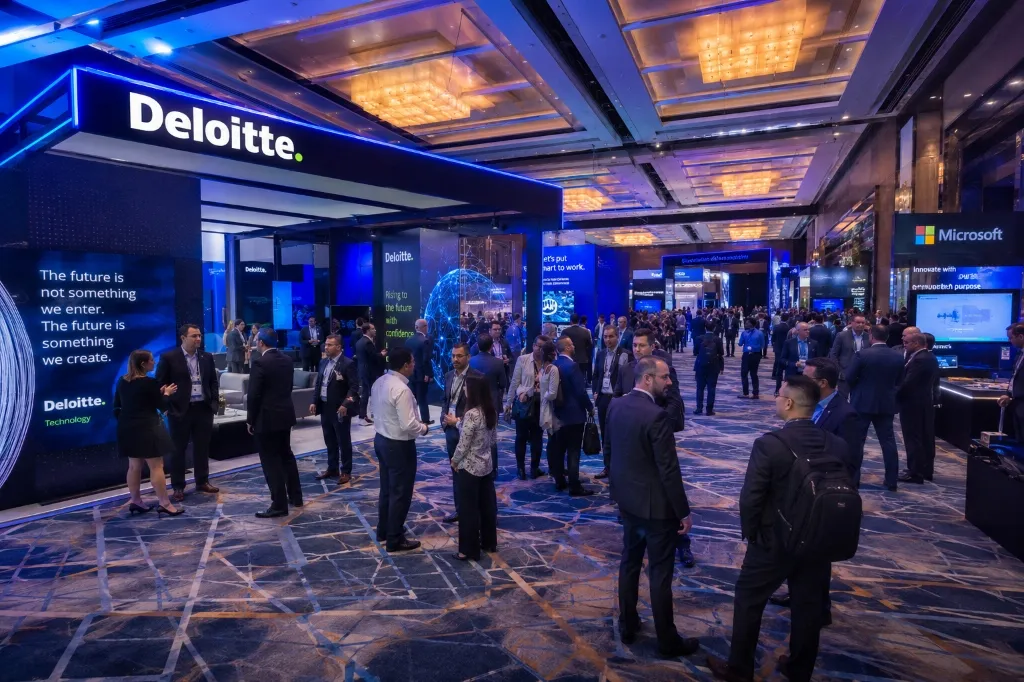
8 Common Corporate Event RFP Mistakes (and How to Solve Them)
Even seasoned enterprise procurement teams fall into predictable traps when issuing event RFPs. Avoid these eight high-frequency mistakes:
| Procurement Mistake | Operational Impact on Event | Actionable Solution |
|---|---|---|
| 1. Vague Business Objectives | Agencies propose disjointed entertainment and superficial décor rather than targeted business solutions. | Define target audience demographics, commercial goals, and core brand messaging in the opening section of the brief. |
| 2. Demanding 3D Renders Without Key Data | Agencies generate fictional 3D stage concepts that cannot physically fit inside the contracted ballroom's ceiling height. | Provide exact venue DWG/CAD floor plans, clear chandelier clearances, and pillar coordinates before requesting 3D designs. |
| 3. Concealing the Budget Range | Wastes internal evaluation time reviewing proposals ranging wildly from ₹5 Lakh to ₹50 Lakh. | State an indicative commercial bracket (±15%). This guides agencies to allocate funds toward hardware where it counts most. |
| 4. Comparing Mismatched Hardware Quotes | Procurement inadvertently compares a broadcast-grade line-array system with low-end powered speakers on tripods. | Mandate that bidders complete a standardized BOQ template specifying equipment brand names, models, and pixel pitches. |
| 5. Ignoring Venue Hidden Surcharges | Surprise post-event invoices for hotel electricity tapping (₹25k–₹60k/day), dark-hour setup fees, and outside AV royalties. | Require agencies to verify venue utility tapping fees, freight dock standby penalties, and royalty charges during site surveys. |
| 6. Insufficient Setup & Rehearsal Time | Technical dry runs are skipped due to compressed setup windows; slide decks fail and audio squeals during keynotes. | Contract an 8-to-12-hour setup window prior to delegate arrival. Never allow live execution without a full cue-to-cue rehearsal. |
| 7. Judging Pitch Decks Over Capability | A slick graphic presentation wins the contract, but the agency's freelance ground crew fumbles live technical cues. | Verify the assigned Technical Director's credentials and inspect video recordings of past live show executions in premier venues. |
| 8. Unclear Internal Approval Hierarchy | Conflicting design feedback from multiple internal stakeholders causes mid-build change fees and delayed milestones. | Designate a single internal Point of Contact (SPOC) with full sign-off authority for creative, commercial, and operational approvals. |
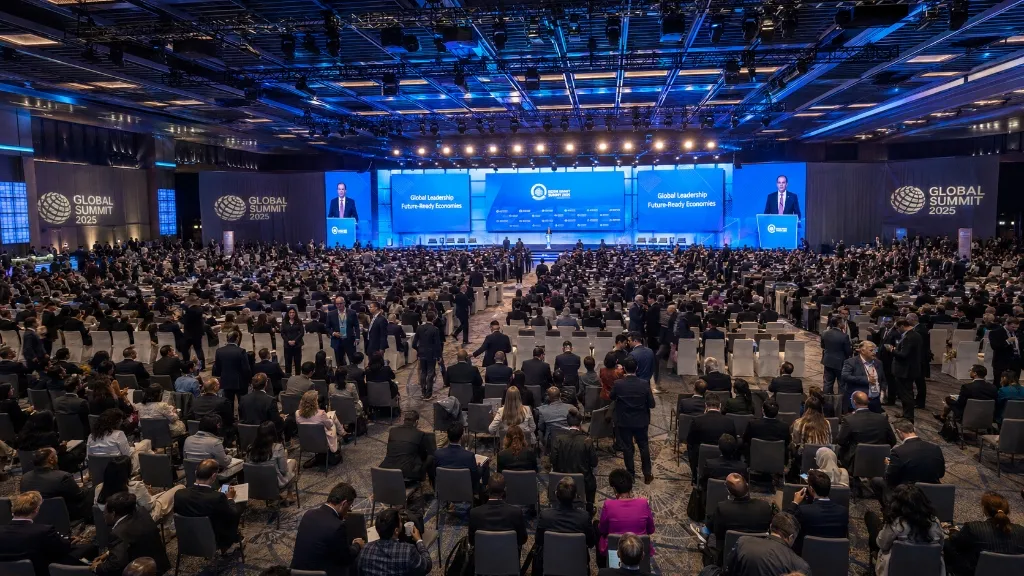
Realistic Event Procurement and Planning Timeline
A well-managed event procurement process requires adequate lead time to ensure thorough agency briefing, creative iteration, and technical verification. Use this standard 12-week procurement and execution roadmap as an operational benchmark:
| Milestone Phase | Recommended Timing | Key Actions & Deliverables | Accountable Parties |
|---|---|---|---|
| Brief Formulation | T-12 to T-10 Weeks | Define business objectives, budget parameters, preliminary headcount, and secure internal approvals. | Internal Event Committee & Procurement |
| RFP Distribution & Q&A | T-10 to T-9 Weeks | Issue RFP to 3–4 shortlisted agencies; conduct joint venue walkthrough; hold written clarification Q&A window. | Procurement Lead & Bidding Agencies |
| Proposal Submissions | T-8 Weeks | Agencies submit 3D stage renders, itemized BOQs, staffing deployment plans, and compliance filings. | Bidding Agencies |
| Pitch Presentations | T-7 Weeks | Shortlisted agencies present creative concepts and technical execution plans; internal committee scores bids. | Agency Leadership & Corporate Evaluation Panel |
| Award & Contracting | T-6 Weeks | Commercial negotiations; execute contract; issue formal Purchase Order (PO); disburse mobilization advance. | Procurement & Selected Agency Partner |
| Pre-Production Engineering | T-5 to T-2 Weeks | Finalize 3D CAD stage drawings; submit municipal license filings (Fire NOC); freeze run-of-show cue sheets. | Agency Technical Director & Corporate SPOC |
| Technical Lock-In | T-1 Week | Final venue technical walkthrough; format speaker presentation decks to native 16:9; complete badge pre-printing. | Agency Show Caller, AV Crew & Speakers |
| Setup & Rehearsals | T-24h to T-4h | Load-in, truss rigging, LED panel alignment, line-array tuning, electrical failover test, and timed mock dry run. | Full Production Crew & Executive Speakers |
| Live Show Execution | T-0 (Event Day) | Minute-by-minute live show calling; delegate ingress management; VIP hospitality; real-time audio/video switching. | Agency Show Director & Floor Managers |
| Strike & Reconciliation | T+1 to T+2 Weeks | Safe teardown; venue damage-free handover; delivery of 4K photo/video archives; final itemized billing reconciliation. | Agency Leadership & Corporate Finance |
Indicative Lead-Time Guidelines: While 10 to 12 weeks is optimal for flagship conferences (500–1,500 delegates), lead times vary by event scale. Executive retreats and CXO dinners (30–80 guests) can be effectively procured in 4 to 6 weeks. Conversely, enterprise trade expos or multi-thousand delegate conventions at convention centers demand 16 to 24 weeks to navigate municipal clearances, trade booth fabrication, and hospitality allocations.
How Aquila Events Responds to Corporate RFPs
At Aquila Events, we approach every corporate RFP not as a speculative design competition, but as a rigorous technical engineering challenge. When our team reviews your brief, we apply a structured execution methodology developed across dozens of high-stakes corporate productions in Delhi NCR and across India:
- Turnkey Accountability: We integrate corporate event management, technical event production, and corporate event staffing under one senior leadership team—eliminating the blame-shifting that occurs when decor, AV, and staffing vendors are booked separately.
- Transparent Line-Item BOQs: Our commercial proposals feature fully itemized Bills of Quantities specifying exact equipment models, fine-pitch LED pixel pitches (P2.6/P2.9), line-array configurations, and clear labor allocations—with zero hidden post-event surcharges.
- Engineering Feasibility First: Every stage design is verified against the venue's actual ceiling height, loading dock clearances, and electrical distribution capabilities through 3D CAD modeling before proposals are presented.
- Verified Regional Track Record:
- National Leadership Summit at Taj Palace, New Delhi: Precision 4K curved LED stage, acoustic line arrays, and seamless VIP protocol for 1,200 senior executives.
- International MICE Conclave at JICC, Delhi NCR: Multi-track breakout staging and high-throughput QR ingress management for 2,500 global delegates.
- Decade of Innovation Gala at ITC Maurya, New Delhi: Immersive gala scenography, kinetic lighting, and awards production for 800 guests.
Frequently Asked Questions About Corporate Event RFPs
A comprehensive corporate event RFP must include the event's business objective, audience size and profile, preferred dates and venue parameters, detailed technical production scope (staging, AV, LED screens, lighting), required creative branding, on-ground event staffing needs, indicative budget range, submission instructions, and transparent evaluation criteria.
An event brief outlines the strategic vision, narrative, attendee profile, and desired business outcomes of the gathering. A Request for Proposal (RFP) is a formal procurement document that incorporates the brief while adding binding commercial terms, itemized scope templates, technical compliance mandates, submission deadlines, and evaluation scoring frameworks.
Yes. Sharing a realistic indicative budget range prevents agencies from submitting incompatible creative or technical concepts. Stating a range (such as ₹15 Lakh to ₹25 Lakh) allows agencies to specify the highest-tier hardware, staging geometry, and staffing redundancy possible within your parameters, rather than guessing blindly.
For most corporate conferences, summits, and annual days, inviting 3 to 4 thoroughly pre-qualified agencies is ideal. Pitching to more than five firms dilutes agency engagement, increases internal evaluation overhead, and rarely yields superior commercial value.
Before comparing headline prices, normalize the line items: verify hardware specifications (fine-pitch LED vs generic screens, line arrays vs basic speakers), check inclusions and exclusions (generator fuel, transport, dark-hour setup surcharges, sound licensing), confirm labor and staffing ratios, and verify statutory GST billing.
For large summits, annual days, or multi-track conferences (500–1,500+ attendees), initiate the RFP process 8 to 16 weeks in advance. For executive roundtables or single-track seminars (50–150 guests), a 4 to 8-week horizon is generally sufficient to secure prime venues and complete technical rehearsals.
Planning a Corporate Summit or Conference in Delhi NCR?
Share your event brief or draft RFP with Aquila Events for an architectural technical feasibility review, itemized line-item BOQ, and custom 3D staging concept.
Ready to Produce Your Next Event?
Consult directly with our technical event architects for turnkey production, staging, and logistics across India.