
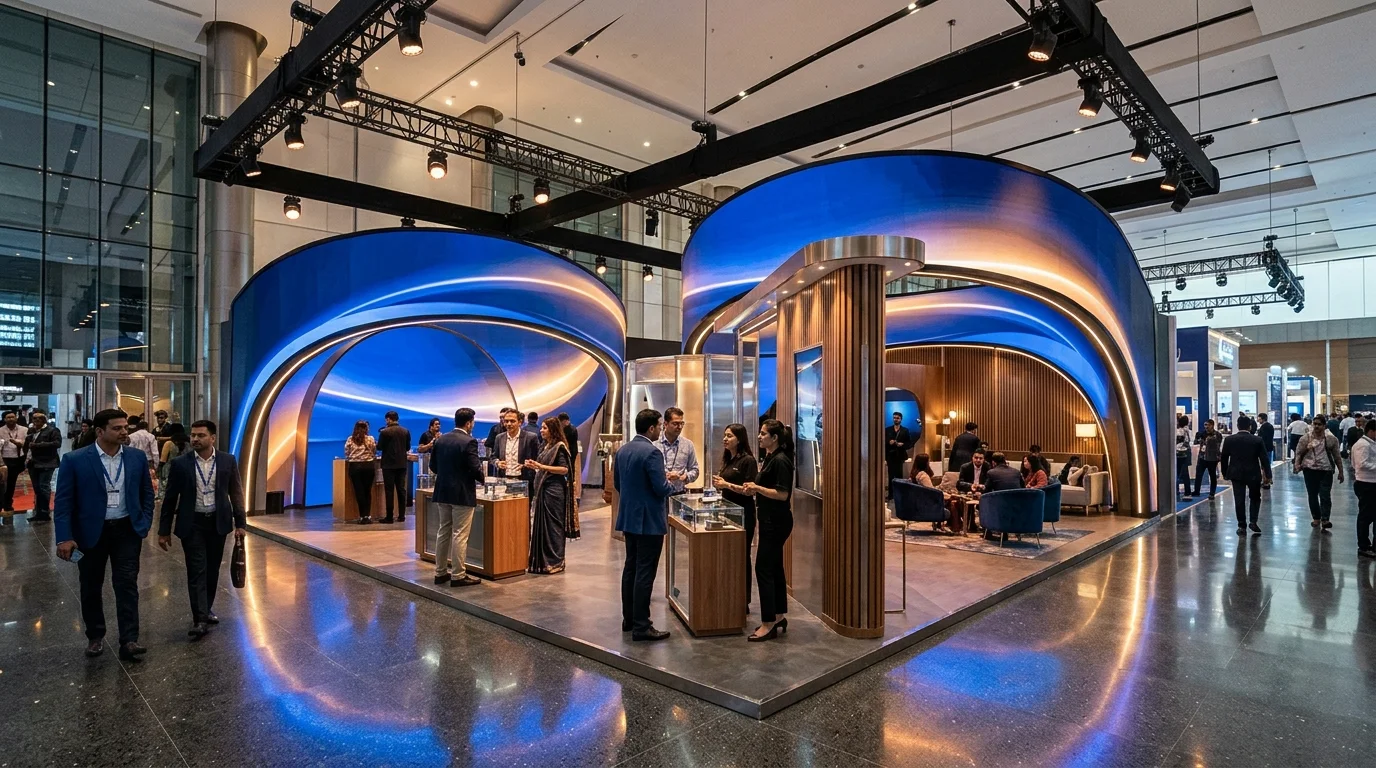
Executive Answer: How to Plan an Experiential Brand Activation in India
An experiential brand activation is a live, participatory marketing installation designed to immerse consumers into a brand narrative through sensory engagement, physical product trials, and two-way dialogue. Unlike broadcast advertising (passive messages), exhibition stalls (static information booths), product displays (merchandise on shelves), or influencer campaigns (digital impressions without physical touch), an activation creates an interactive physical destination. High-impact activations unite five pillars: (1) Purpose-Built Spatial Architecture, (2) Hands-On Product Trial, (3) Creator Amplification, (4) Consented First-Party Data Capture, and (5) Multi-Touch ROI Attribution.
Campaign Timelines & Lead-Time Variables: Comprehensive brand activation campaigns involve distinct planning tracks. While full end-to-end campaign development (creative strategy, mall licensing, creator agreements, and multi-department approvals) commonly spans 6 to 12 weeks depending on project complexity, Aquila Events' specialized production workflow on Brand Activations delivers dedicated 3D spatial engineering, workshop fabrication, and on-site venue clearances in a focused 2 to 5-week execution window. Timelines are inherently project-dependent rather than a universal industry benchmark, varying with venue clearance cycles, structural scale, and custom fabrication requirements.
In an Indian market saturated with programmatic digital ads and short-form video feeds, consumer attention has fragmented. While digital impressions deliver top-of-funnel reach, they struggle to establish sensory trust or product conviction. Leading enterprise, automotive, technology, and luxury brands are therefore reallocating marketing capital toward on-ground experiential brand activations.
Experiential marketing replaces passive viewing with active participation—whether testing haptic feedback in a driving simulator, analyzing dermal health with diagnostic sensors, or competing in esports arenas. Moving from creative ambition to measurable commercial results requires disciplined audience journey mapping, technical safeguards, and structured return on investment (ROI) attribution. For enterprise marketing teams evaluating agency procurement criteria, our companion guide on corporate event RFP templates and agency evaluation outlines standard evaluation frameworks.
Below, the production directors at Aquila Events provide a research-backed guide to planning, building, and measuring brand activations in India—examining 2026 industry benchmark data, activation formats, visitor journey design, a 4-pillar ROI framework, technical execution safeguards, and critical pitfalls.
Why Brands in India Are Investing in Live Experiences (2026 Research Insights)
The strategic shift toward experiential marketing is backed by authoritative 2026 research examining Indian marketer sentiment and consumer behavior:
1. Nielsen Annual Marketing Report 2026: Marketer Intent and Creator Synergy
According to India-specific findings from the Nielsen Annual Marketing Report 2026—reported by Business Standard across a sample of 200 Indian brand marketers:
- 94% of surveyed Indian marketers expect to increase spending on sponsorship and event media over the next 12 to 24 months.
- 81% of respondents rate influencer and creator content as very or extremely effective in driving consumer engagement.
- 61% of brand marketers view sports sponsorship and live sports environments as a high-potential testing ground to engage new audience demographics and enter emerging regional markets.
- 42% of marketers report measuring ROI holistically across combined traditional and digital media channels.
Methodological Context: These metrics reflect surveyed marketers' future spending intentions and strategic perceptions rather than audited historical expenditure. Additionally, the 81% creator effectiveness rating reflects general cross-channel marketing perceptions across digital platforms, rather than an event-exclusive measurement; creators amplify digital awareness, while physical immersion drives tactile trust. Finally, the 42% holistic measurement statistic underscores that cross-channel attribution remains an emerging capability with substantial room for maturity, rather than indicating that brands cannot track on-ground event outcomes.
2. EY-Parthenon & BookMyShow: The Experiential Consumer Imperative
Consumer dynamics are detailed in the joint study by EY-Parthenon and BookMyShow, "Why Brands in India Are Turning to Experiential Marketing" (see the direct EY Experiential Marketing Report PDF):
- 78% of surveyed Indian consumers express a clear preference for investing in memorable experiences over material products alone.
- 59% brand recall was documented among attendees following interactive brand integration at live events.
- 55% of surveyed participants reported higher purchase intent after engaging with an on-ground brand activation.
- 63% of attendees felt that well-integrated brand activations actively enhanced their overall event experience.
- Over 50% of surveyed brands executed dedicated experiential activations during the preceding 12 months.
- Primary Objectives Cited by Marketers: When deploying experiential activations, brand leaders identified brand awareness (67%), product sampling and trial (56%), sales growth (56%), and brand storytelling (44%) as their principal campaign goals.
- The Measurement Barrier: Significantly, 43% of brand respondents cited measurement and attribution challenges as a key barrier preventing wider adoption of experiential marketing budgets.
Methodological Context: The attendee findings in the EY-Parthenon report are derived from 7,450 post-event surveys administered across selected ticketed live events, concerts, and cultural festivals in India during 2025. While these metrics demonstrate powerful engagement within live entertainment environments, they should not be cited as a universal, automatic causal guarantee for every standalone retail or commercial pop-up.
Modern Brand Activation Formats: Matching Architecture to Campaign Goals
Brand activations are not uniform installations. Selecting the right format depends on campaign objectives, audience demographics, target dwell time, and venue logistics:
| Activation Format | Strategic Fit & Prime Venues | Typical Footprint | Dwell Time | Primary Measurement Focus |
|---|---|---|---|---|
| 1. Retail & Mall Pop-Ups | Tactile consumer discovery and sampling in premium malls (DLF Emporio, Select CITYWALK, Phoenix Palladium). | 200 – 800 sq. ft. | 4 – 8 Min | Qualified interactions, trial completion rate, retail store foot-traffic lift. |
| 2. Product Launch Demo Zones | Interactive feature exploration, tech hands-on, and VIP reveals (consumer electronics, beauty devices, automotive). | 500 – 2,500 sq. ft. | 8 – 15 Min | Demonstrations completed, pre-orders initiated, media impressions. |
| 3. High-Traffic Sampling Kiosks | Rapid trial, sensory taste/fragrance encounters, volume distribution in transit hubs and business parks. | 100 – 300 sq. ft. | 60 – 120 Sec | Samples distributed, unique QR scans, immediate discount redemption. |
| 4. Auto Expo & Exhibition Pavilions | Large-scale trade showcases, engineering authority, multi-zone pavilions (India Expo Centre, Bharat Mandapam). | 1,500 – 12,000 sq. ft. | 15 – 30 Min | High-density footfall, B2B qualified leads, executive meetings. |
| 5. Sports & Fan-Zone Activations | High-energy gamification, physical agility challenges, stadium concourses during major tournaments. | 400 – 1,500 sq. ft. | 3 – 6 Min | Gamified participation count, digital leaderboard shares, brand sentiment. |
| 6. Festival & Concert Integrations | Cultural brand immersion, VIP viewing decks, chillout lounges, and hydration stations at ticketed music festivals. | 500 – 2,000 sq. ft. | 5 – 12 Min | Attendee recall (EY 59% benchmark), social check-ins, UGC volume. |
| 7. Creator-Led Studio Hubs | Live-streaming pods, podcast stages, and unboxing environments generating organic digital content on ground. | 300 – 1,000 sq. ft. | 6 – 10 Min | Creator content reach, broadcast view duration, digital engagement. |
| 8. Multi-City Touring Roadshows | Modular traveling pavilions deployed across Tier-1 and Tier-2 growth markets (Chandigarh, Jaipur, Pune, Kochi). | 400 – 1,200 sq. ft. | 5 – 10 Min | Cost per regional contact, local dealer inquiries, geographic penetration. |
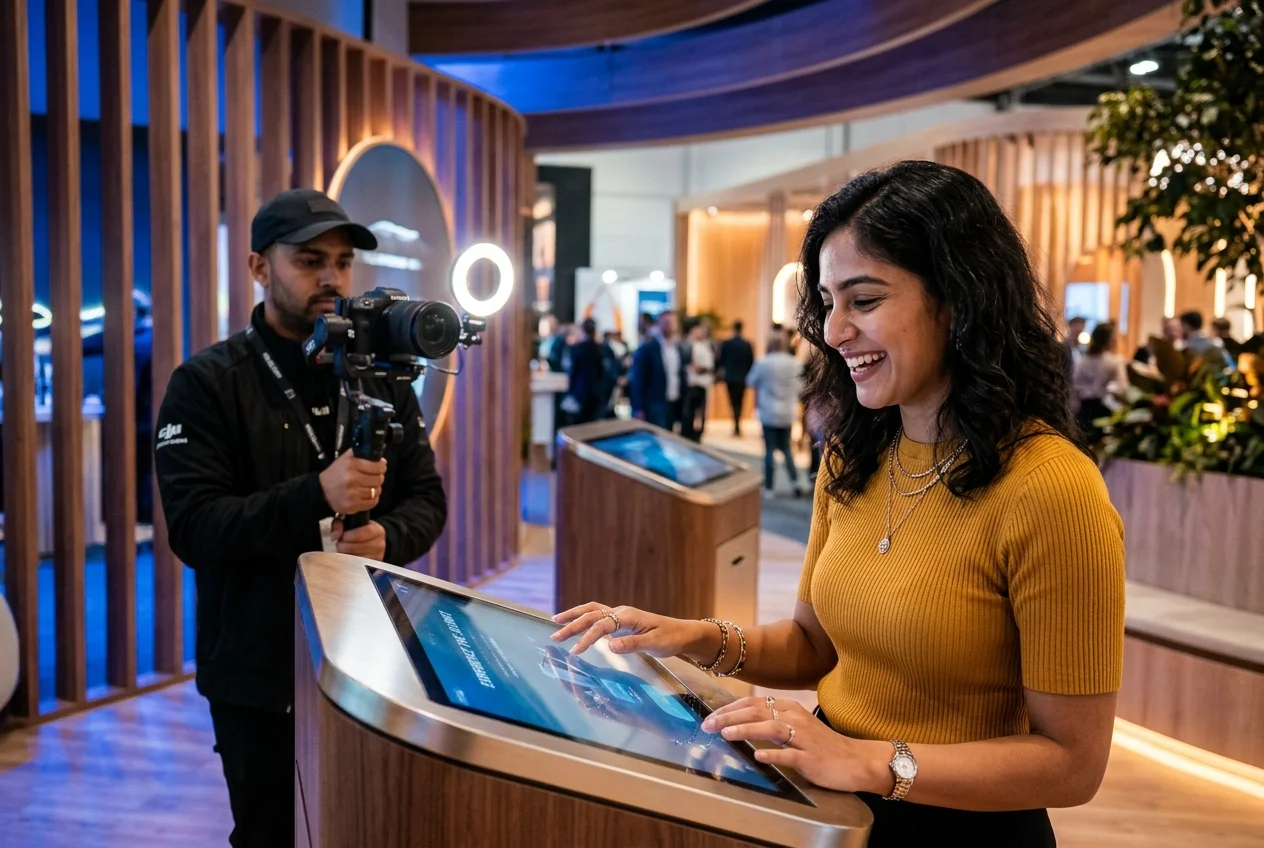
Creator-Led Amplification: Bridging Physical Staging and Digital Reach
A physical brand activation in a shopping mall or exhibition hall has a natural physical capacity: a 500-square-foot pavilion might engage 1,500 to 3,000 visitors over a weekend. Integrated with an intelligent creator content strategy, that same installation becomes a broadcast studio for hundreds of thousands of digital impressions. As revealed in the Nielsen 2026 report, 81% of Indian marketers view creator-led content as highly effective. The key is integrating creators naturally so the activation does not deteriorate into an artificial, cordoned-off photo shoot.
Successful creator integration follows four structured principles:
- Audience Fit Over Follower Count: Prioritize category credibility and audience demographic alignment over vanity follower counts. A micro-creator with 50,000 active enthusiasts drives higher commercial conversion than a generic influencer with 1,000,000 disengaged followers.
- Four-Phase Campaign Phasing: Structure creator participation across pre-event teaser drops (driving footfall), live on-ground product trials, dedicated content capture zones, and post-event paid ad whitelisting.
- Optional Technical Capture Considerations: Where an activation features intensive live broadcasting or on-ground video production, teams may consider dedicated capture provisions based on venue facilities, the content plan, and production requirements—such as supplemental high-CRI studio lighting (e.g., 5600K daylight-balanced fixtures) to maintain color accuracy under mixed mall illumination, directional wireless microphones to mitigate ambient acoustics, temporary high-speed connectivity for live streaming, and gimbal stabilization. These are elective technical considerations determined by the specific campaign brief, not mandatory specifications for every physical activation.
- Contractual Usage & Whitelisting Rights: Ensure talent agreements explicitly secure commercial ad whitelisting, cutdown rights for paid digital performance funnels, and UTM tracking links to measure downstream conversions.
Cross-Channel Context Note: As established in the Nielsen study, the 81% creator effectiveness metric reflects cross-channel performance; creators amplify digital awareness, but physical on-ground interaction delivers the product conviction that closes sales.
Designing the Frictionless Audience Journey: The 5-Step Engagement Flow
A successful brand activation guides visitors naturally from passive awareness to active advocacy without confusing queues or aggressive sales tactics. Disciplined experiential architecture follows a staged five-step journey:
| Journey Phase | Audience Mindset | Spatial & Operational Design Response | Typical Dwell Time |
|---|---|---|---|
| 1. Discover | Passing footfall; glancing at the space from a 10-meter perimeter. | Curved LED signage, kinetic architectural motion, open sightlines, absence of high perimeter walls; clear brand identification. | 5 – 15 Seconds |
| 2. Engage | Curious; stepping across the threshold to inspect the installation. | Welcoming greeting by trained brand ambassadors; an intuitive, low-barrier opening prompt (sensory fragrance bar, digital touch selector). | 30 – 60 Seconds |
| 3. Experience | Immersed; actively testing the product or completing a challenge. | Dedicated hands-on demo pods, guided specialist walkthrough, multi-sensory trial, or gamified interactive competition. | 2 – 6 Minutes |
| 4. Remember | Satisfied; reflecting on the core benefit and emotional takeaway. | Personalized digital output, customized physical takeaway, immediate photo delivery, or premium gift packaging. | 60 – 90 Seconds |
| 5. Continue | Post-event; receptive to relevant digital follow-up and purchase. | Opt-in SMS/WhatsApp delivery of personalized demo results, retail discount voucher, or invite to exclusive community portal. | Ongoing (Days 1–14) |
Privacy-Respecting Lead Capture & Transparent Consent: Forcing visitors to fill out intrusive forms before touching a product creates friction and erodes brand trust. Effective on-ground lead generation should be built on a clear, voluntary value exchange—visitors provide contact details solely to receive personalized trial results, high-resolution media captures, or exclusive purchase vouchers. Brands should implement transparent purpose disclosure, collect only information strictly needed for the stated campaign purpose, and ensure marketing follow-up is never an undisclosed condition of unrelated participation or trying a demo.
Regulatory Notice: While India's Digital Personal Data Protection (DPDP) Act, 2023 and the DPDP Rules, 2025 establish the nation's forthcoming data protection framework, the regulatory regime features a phased commencement timeline. As set out in the Ministry of Electronics and Information Technology's official commencement notification (S.O. 4930(E)), core provisions concerning consent notices and personal data processing are scheduled to commence 18 months after 13 November 2025. Organisations should design privacy-respecting consent architectures and obtain qualified professional advice on applicable current requirements and the upcoming DPDP framework. This editorial guidance does not constitute formal legal counsel.
How to Measure Experiential Marketing ROI: The 4-Pillar Evaluation Framework
With 43% of enterprise brand marketers in the EY-Parthenon study identifying measurement as a barrier to experiential investment—and only 42% measuring ROI holistically in the Nielsen report—establishing a structured evaluation model before production begins is essential:
Core Calculation Methodology: Engagement & Trial Metrics
To standardize reporting across multi-city activations, Aquila's production teams deploy four standardized calculation formulas:
- Interaction Rate (%):
(Unique Meaningful Interactions ÷ Qualified Footfall) × 100 - Trial Completion Rate (%):
(Completed Product Demonstrations ÷ Total Initiated Demonstrations) × 100 - Cost Per Qualified Interaction (CPQI):
Total Campaign Investment (₹) ÷ Total Meaningful Interactions - Cost Per Qualified Lead (CPQL):
Total Campaign Investment (₹) ÷ Total Consented Qualified Leads
Note: The formulas above represent calculation methods, not guaranteed industry benchmarks. Target percentages vary depending on whether the activation format is a rapid 60-second sampling kiosk or a 15-minute immersive technical demonstration.
The four evaluation pillars include:
- 1. Reach & Footfall Quality: Measuring qualified footfall matching target demographics entering the visual zone, filtering out general mall walk-bys.
- 2. Active Participation & Dwell Time: Tracking attendees spending >90 seconds participating in guided demonstrations and calculating the Interaction Rate.
- 3. Commercial Outcomes & Pipeline Velocity: Auditing consented Marketing Qualified Leads (MQLs), instant orders, dealer appointments, and dynamic QR code redemptions within a 30-day window.
- 4. Brand Equity & Recall Lift: Benchmarking against industry standards—such as the EY-Parthenon 59% live-event recall and 55% purchase intent metrics—using post-event sample surveys and social sentiment tracking.
Attribution Reality: In high-consideration purchases (automobiles, consumer tech, luxury), an activation operates within a multi-touch attribution ecosystem. Expecting 100% immediate on-ground purchase closure overlooks buyer journeys; experiential activation primarily accelerates consideration and builds purchase conviction.
Production Architecture and Operational Execution: From Brief to Handover
Flawless brand activation demands rigorous technical coordination across ten sequential production phases:
- Brief & Objective Definition: Establishing commercial targets, audience personas, spatial footprints, and budget envelopes.
- 3D Spatial Design & Sightline Modeling: Engineering CAD floor plans for visitor circulation, wheelchair ramps, and entrance sightlines.
- CNC Fabrication & Fire-Retardant Materials: Specifying high-density CNC-milled MDF, brushed aluminum extrusions, and certified flame-retardant finishes.
- Audiovisual Hardware & Display Rigging: Integrating indoor fine-pitch LED screens (P1.9/P2.6), directional audio cones, and synchronized DMX ambient lighting.
- Electrical Distribution & Power Safety: Deploying industrial distribution boards with Residual Current Circuit Breakers (RCCBs) and voltage stabilizers.
- Brand Ambassador Selection & Training: Sourcing professional, multilingual brand specialists through networks like Aquila & Promotr Staffing, supported by structured product scripts. For staffing models, review our guide on corporate event staffing headcounts.
- Queue Management & Access Control: Installing tensa-barriers, digital registration tablets, and QR scanners to handle crowd flow smoothly.
- Dark-Hour Installation (Midnight to 6:00 AM): Executing overnight load-in inside malls and convention halls with floor-protective rubber mats.
- Live Technical Direction & Real-Time Auditing: Dedicated show callers managing promoter shifts, technical AV consoles, and material restock.
- Systematic Strike & Venue Handover: Dismantling structures safely during dark hours, packing hardware into flight cases, and completing joint venue inspections.
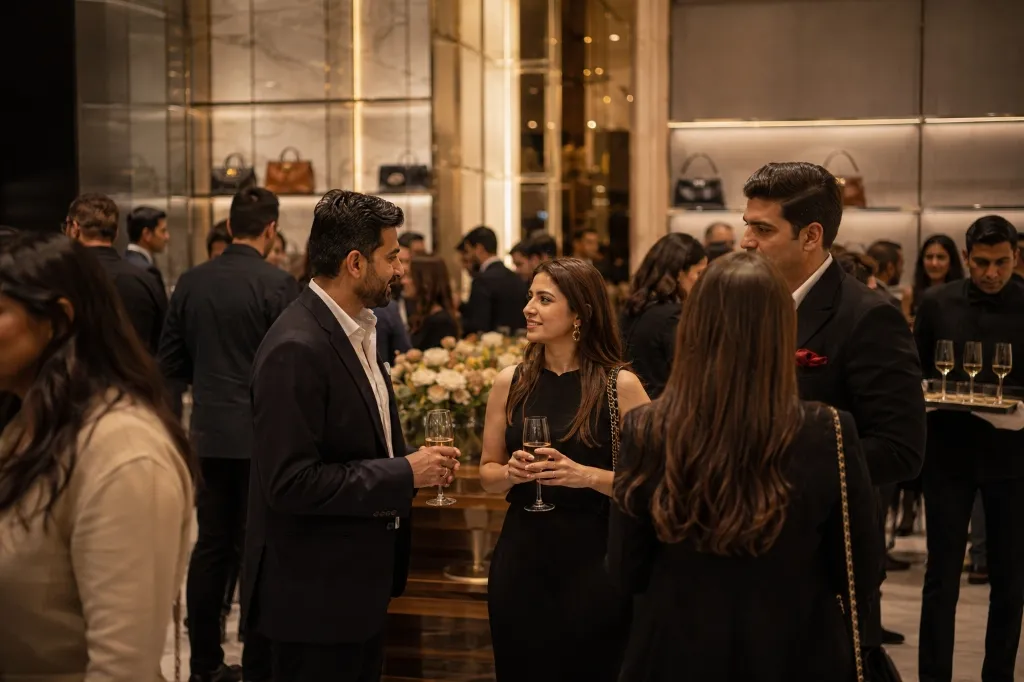
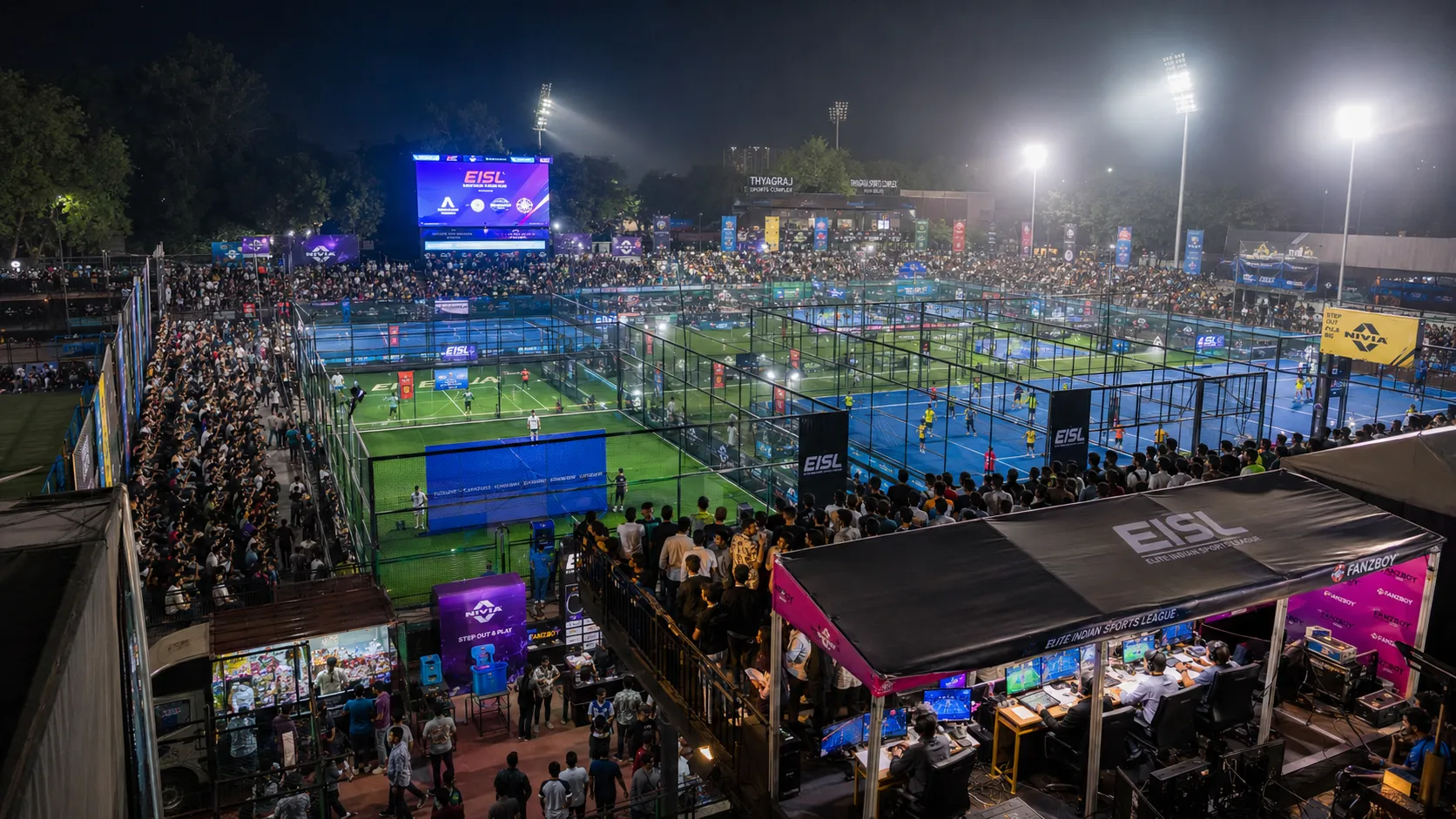
Aquila Case Study Benchmarks: Documented execution capabilities include the Auto Expo Brand Pavilion at India Expo Centre, Greater Noida (multi-zone automotive showcase), the Luxury Retail Flagship Launch at DLF Emporio, New Delhi (bespoke architectural retail staging), and the Elite Multi-Sport Box League at Thyagraj Sports Complex, New Delhi (indoor arena fan activation). (Case study references illustrate Aquila's technical production capabilities and do not represent guaranteed commercial ROI metrics.)
Technology, AI and Sustainable Engineering in Brand Activations
Contemporary activations in India are shaped by artificial intelligence and an urgent requirement for operational sustainability:
1. AI-Driven Personalization (KPMG India 2026 Insights)
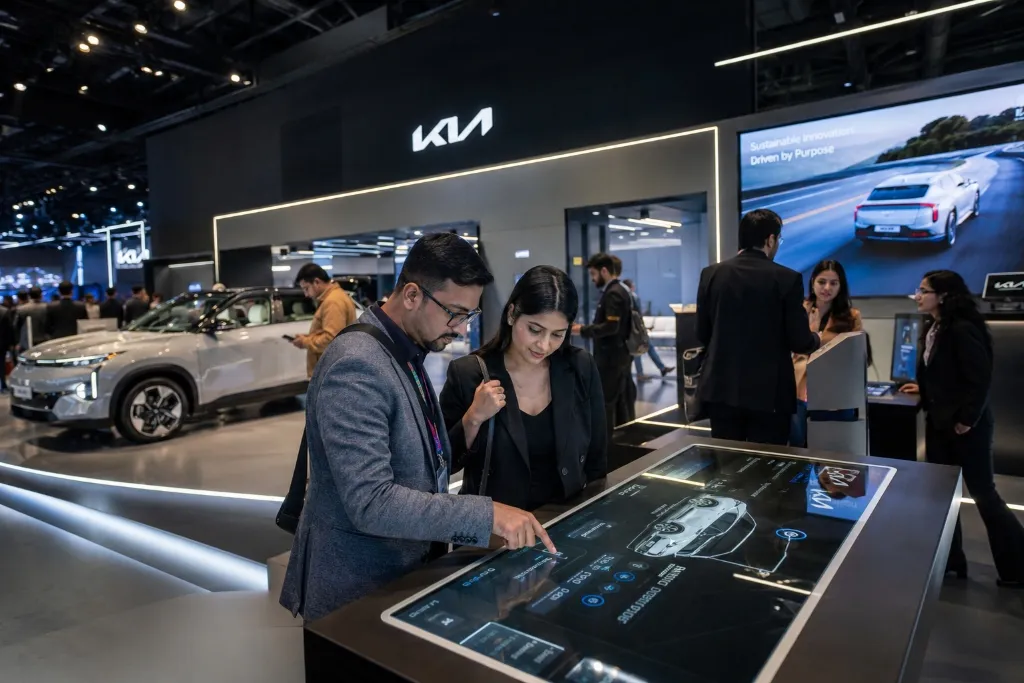
According to KPMG India's 2026 report on the Socio-economic Impact of the Indian Events and Experiences Industry, 44.8% of surveyed event organizers in India already use AI for content creation, logistics planning, or audience personalization. Practical applications include real-time generative avatar video booths, predictive overhead crowd-density monitoring, and touchscreen diagnostic product matchmakers.
2. Sustainable Production Engineering
The KPMG study reveals that 68% of surveyed organizers report growing client requests for sustainability credentials, while 70% of surveyed event visitors indicated willingness to pay a 5% to 10% premium for environmentally sustainable events. Practical sustainability requires:
- Reusable Modular Aluminum Substructures: Utilizing modular aluminum frames (Octanorm, Maxima, box trusses) reusable across 50+ tour stops rather than single-use timber and thermocol.
- Energy-Efficient Solid-State LED Tech: Deploying 100% low-heat LED fixtures and screen processors to cut electrical draw by up to 60%.
- Regional Cluster Fabrication: Fabricating skins in local city hubs (Delhi NCR, Mumbai, Bengaluru) to reduce inter-state road freight emissions.
- Certified Materials & Waste Reduction: Specifying FSC-certified wood, water-based non-toxic paints, and centralized filtered water dispensers in place of single-use bottles.
3. Navigating the Statutory Permission Bottleneck
Significantly, 80% of organizers in KPMG's 2026 research identified obtaining event permissions as a major hurdle. Sourcing statutory clearances requires early liaison for Shopping Mall technical drawings, Municipal Corporation trade licenses (MCD/BMC/BBMP), local police traffic NOCs, and Fire Department certifications verifying flame-retardant materials.
Attribution Note: These figures reflect KPMG's 2026 India research respondent cohorts and should not be cited as universal industry-wide adoption.
Budget Variables & Copy-Ready Agency Briefing Template
Fixed package pricing for brand activations is unrealistic because spatial footprints, venue tiers, and material finishes vary widely. Key budget components include:
- Venue License & Mall Royalties: Prime atrium rentals, electricity tapping fees, and overnight loading surcharges.
- Custom Fabrication: Material choices ranging from painted MDF to CNC-fluted timber, architectural steel, and glass plinths.
- AV & Interactive Hardware: Fine-pitch LED walls (P1.9/P2.6), touch displays, directional audio, and custom software licenses.
- Staffing & Hospitality: Daily rates for trained brand ambassadors, technical operators, and supervisors.
- Freight & Handling: Multi-city transit crates, padded flight cases, and local loading labor.
- Creator Fees & Rights: Talent retainers, production riders, and digital ad whitelisting rights.
- Permits, NOCs & Insurance: Statutory municipal fees, fire clearances, and Commercial General Liability (CGL) coverage.
- Illustrative Contingency Allowance: An optional 10% to 15% planning reserve (an illustrative planning allowance rather than a verified industry standard) to accommodate unforeseen site requirements, last-minute power drops, or venue overtime surcharges.
Copy-Ready Brand Activation Briefing Template
Use this 10-point briefing checklist to solicit structured, comparable proposals from event production agencies:
| Briefing Parameter | Required Brand Specification | Agency Deliverable Required |
|---|---|---|
| 1. Campaign Objective | Primary goal: Brand awareness, hands-on product trial, direct lead generation, or creator UGC amplification. | Concept alignment and recommended interaction mechanics. |
| 2. Target Persona | Demographic profile, consumer age bracket, psychographic interests, and purchase power expectations. | Staffing profiles, aesthetic styling, and tone-of-voice script. |
| 3. Target Cities & Venues | Specific locations (Delhi NCR, Mumbai, Bengaluru) and preferred venue types (luxury malls, tech parks, expos). | Venue feasibility, spatial fit, and loading dock access analysis. |
| 4. Spatial Footprint | Exact contracted or proposed dimensions (e.g., 20 ft x 20 ft island, 30 ft x 15 ft walkthrough). | Scale 3D CAD renders, visitor circulation layout, and sightline diagrams. |
| 5. Interaction Core | Specific product features to demonstrate (live software demo, cosmetic texture trial, haptic test). | Detailed user journey map and interactive technology specification. |
| 6. Creator Integration | Number of creators, target category tier (macro vs. micro), and expected content deliverables (Reels/Shorts). | Content capture plan, optional broadcast/audio workflow based on venue requirements, and talent coordination protocol. |
| 7. First-Party Data Needs | Specific lead data fields required (name, phone, timeline to purchase) and CRM integration preference. | Privacy-respecting data capture flow, transparent consent notices, and verification protocol. |
| 8. Production Timeline | Target live campaign dates, advance load-in window, and multi-city tour schedule. | Fabrication schedule, delivery Gantt chart, and dark-hour install plan. |
| 9. Material Standards | Sustainability requirements (modular aluminum vs. timber, zero single-use plastic, fire-retardant ratings). | Detailed material specification sheet and fire safety certifications. |
| 10. Commercial Format | Itemized Bill of Quantities (BOQ) separating fabrication, AV, staffing, and agency management fees. | Line-item commercial quotation with explicit tax and payment milestones. |
8 Critical Brand Activation Pitfalls to Avoid
Experienced marketing directors guard against eight common operational errors:
- Concept Without Commercial Purpose: Building an elaborate installation that entertains visitors without communicating product benefits or driving commercial inquiry.
- Chasing Vanity Footfall Over Qualification: Valuing thousands of passive passerby impressions over dozens of deeply engaged target consumers.
- Queue Congestion: Poor visitor flow creating 20-minute bottlenecks that block public walkways and prompt mall security warnings.
- Creators Without Clear Roles or Rights: Paying influencers for superficial selfies without on-camera product demonstrations or digital whitelisting rights.
- Intrusive Lead Scraping: Ambushing visitors with clipboards before they understand the brand, generating fake data and eroding trust.
- Post-Event Measurement Scramble: Attempting to quantify ROI after the event without setting tracking QR codes, promo tags, or pre-event baselines.
- Ignoring Venue Technical Constraints: Arriving with oversized structures that exceed freight lift dimensions, floor load limits, or fire codes.
- Superficial Greenwashing: Promoting sustainability on paper while discarding tons of single-use timber and plastic post-event.
Frequently Asked Questions About Brand Activations in India
An experiential brand activation is a live, participatory marketing campaign that immerses consumers into a brand's narrative through hands-on product trials, physical demonstrations, sensory environments, and two-way interaction. Unlike passive broadcast ads, an activation focuses on audience participation, tactile product familiarity, and emotional storytelling to drive commercial intent and digital amplification.
While an exhibition stall is typically a transactional space designed to distribute brochures within a trade show, an experiential brand activation is an immersive destination. Activations are engineered around a defined visitor journey, featuring tactile demonstrations, interactive technology, gamified challenges, curated aesthetics, and creator capture zones that prioritize deep engagement over passive footfall.
Common formats include: (1) Mall and luxury retail pop-ups, (2) Dedicated product launches and demo zones, (3) High-traffic sampling kiosks, (4) Auto Expo and trade exhibition pavilions, (5) Sports-event fan villages and stadium activations, (6) Music festival brand integrations, (7) Creator-led live broadcast studios, and (8) Multi-city traveling brand tours across Tier-1 and Tier-2 growth markets.
Brands evaluate activation return on investment using a four-pillar framework: (1) Reach & Footfall Quality (demographic fit), (2) Active Participation & Dwell Time (interaction rate and completed demonstrations), (3) Commercial Outcomes (cost per qualified interaction, consented lead volume, and post-event sales conversions), and (4) Brand Equity (pre-to-post brand recall lift, purchase intent shift, and creator content reach).
Creators should be integrated as active participants and storytellers rather than static photo props. Successful integrations involve selecting creators with genuine category credibility, building pre-event anticipation through teaser content, hosting live product demonstrations on ground, and—where the content plan and venue conditions warrant—evaluating optional technical capture support (such as supplemental lighting or directional audio) for real-time social video capture alongside explicit commercial usage and whitelisting agreements.
Activation timelines depend on campaign scope, spatial footprint, and venue requirements. While holistic campaign planning—encompassing brand strategy, mall license agreements, creator talent booking, and municipal permits—often spans 6 to 12 weeks, specialized production partners like Aquila Events execute the dedicated 3D spatial engineering, CNC workshop fabrication, and technical venue load-in within a streamlined 2 to 5-week production window. Exact schedules are project-dependent and vary based on structural complexity, fabrication lead times, and venue approval cycles.
A comprehensive agency proposal should provide: (1) Creative spatial concept and 3D architectural renders, (2) Step-by-step visitor journey mapping, (3) Itemized bill of quantities (BOQ) covering fabrication materials and AV hardware, (4) Promoters and brand ambassador profile standards, (5) Technical electrical load and generator contingency plans, (6) Installation and dismantling schedules, (7) Statutory permission checklists, and (8) Explicit KPI measurement methodology.
Plan Your High-Impact Brand Activation with Aquila Events
From executing multi-zone exhibition pavilions at India Expo Centre to curating bespoke luxury boutique reveals inside DLF Emporio and commanding high-energy fan-zone arenas, Aquila Events integrates spatial architecture, precision fabrication, fine-pitch display technology, and disciplined ROI attribution to deliver experiential marketing campaigns that captivate audiences and drive measurable business growth.
Consult with Our Experiential Production Directors
Share your brand objectives, target audience, preferred cities, and campaign timelines. Our senior production team will engineer a tailored 3D spatial concept, visitor journey architecture, and transparent commercial proposal.
Ready to Produce Your Next Event?
Consult directly with our technical event architects for turnkey production, staging, and logistics across India.