
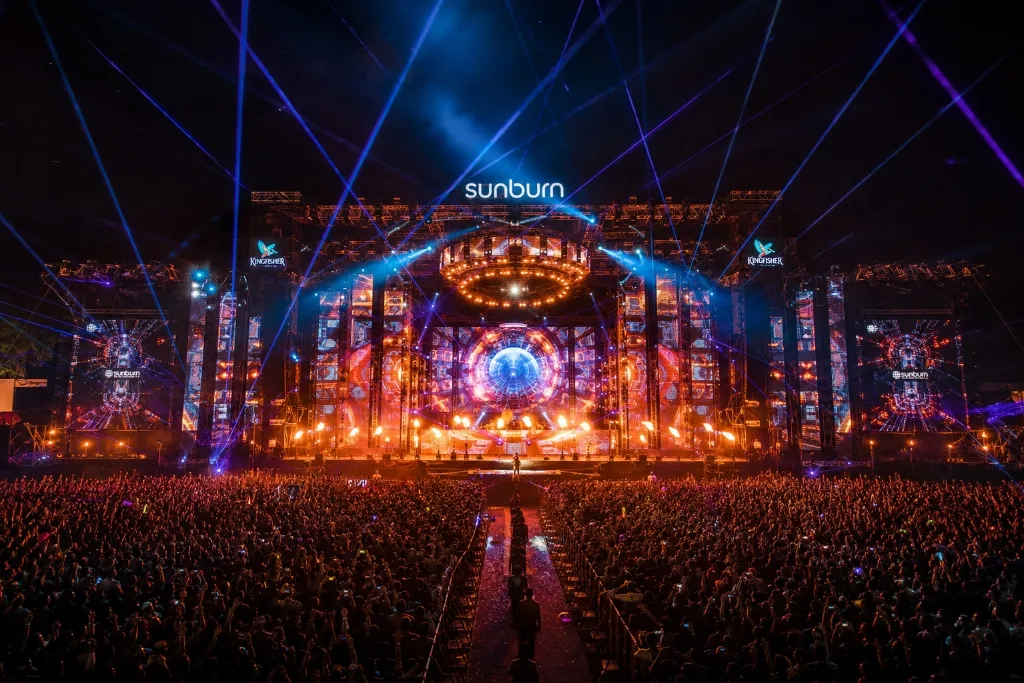
Organizing a music festival with tens of thousands of fans is a massive logistical and structural challenge. Every speaker placement, structural clamp, and emergency exit lane is mapped with millimeter precision weeks before the gates open. Stadium-scale concert production requires a symphony of technical skills, from acoustic physics to mechanical engineering, to create a safe and electrifying show.
1. Heavy Rigging and Stage Mechanics
Modern festival stages carry immense weight—ranging from moving automated LED panels to kinetic light rigs. Aquila's structural engineering team collaborates with rigging experts to perform rigorous load-bearing assessments, wind-load analysis, and ground pressure tests to keep artists, crew, and fans safe in all weather conditions. We utilize high-grade aluminum trusses and specialized heavy-duty motors that are monitored in real-time by digital load-cells, ensuring that structural loads never exceed safe operating limits.
Wind shear is one of the greatest hazards in outdoor stadium shows. Our stages are designed with quick-release canvas walls and mesh backdrops that allow wind to pass through, reducing the structural drag during sudden weather changes. In the event of high winds, we establish automated safety thresholds: at 35 km/h, we lower high-suspended LED screens, and at 50 km/h, we clear the stage area, executing pre-planned protocols designed to protect the audience and equipment.
2. Acoustic Modeling & Tuning
Outdoor arenas present significant sound delay and echo challenges. We utilize advanced acoustic software to run 3D simulations of the stadium prior to staging, positioning line-array speakers at mathematically optimized angles to deliver balanced, crisp sound to every attendee. By calculating the sound travel times from the main stage to the back of the stadium, we set up secondary delay towers that fire audio in perfect synchronization, preventing the muddy echo effect that often plagues large stadium events.
Our audio engineers use real-time pink noise generation and calibration microphones placed throughout the arena to tune the sound system. We adjust equalizer curves and delay parameters to compensate for changing temperature and humidity levels as the stadium fills with fans, ensuring that the bass is punchy and the vocals are crystal clear whether you are in the front row or the highest balcony seat.
3. Dynamic Visual Syncing & Crowd Safety
We synchronize live pyro, automated laser displays, and video streams on grand-scale LED screens. This immersive, synchronized experience ensures that the visual impact matches the power of the sound systems. Behind the scenes, crowd control and medical logistics are managed from a central command office, with designated security corridors and multiple entry-exit gates to keep traffic flowing smoothly. Emergency protocols are rehearsed extensively, and backup power generators are kept running to ensure that critical lights and communications remain active no matter what happens.
Ready to Produce Your Next Event?
Consult directly with our technical event architects for turnkey production, staging, and logistics across India.